

Introduction
“My son used to hate writing,” said Ravi, a Sharjah-based parent. “But after starting writing classes for kids at his school, he actually asks to write. He’ll come home and tell me about the story he’s creating. It’s remarkable.” This shift—from reluctant writer to engaged storyteller—is what quality writing classes for kids accomplish. They transform writing from a school obligation into a meaningful skill and creative outlet.
In today’s curriculum, whether it’s CBSE, IB, British, or American standards taught across UAE schools, writing skills are non-negotiable. Yet many children struggle with writing. They find it frustrating, boring, or anxiety-inducing. Traditional approaches—grammar drills, isolated writing assignments, minimal feedback—often deepen this disconnect rather than inspire enthusiasm.
Writing classes for kids address this gap. They’re specifically designed to make writing accessible, enjoyable, and effective. Unlike generic tutoring focused purely on academic performance, good writing classes develop the whole writer: their confidence, creativity, communication skills, and understanding of why writing matters.
What exactly happens in quality writing classes for kids? Instructors teach foundational skills—sentence structure, paragraph organization, vocabulary, grammar—but they do it through engaging activities rather than mind-numbing repetition. They introduce various writing genres—storytelling, poetry, journals, descriptive writing—so children discover what resonates with them. They provide regular feedback that’s encouraging rather than demoralizing. Most importantly, they create environments where writing feels safe, where mistakes are learning opportunities, and where each child’s voice is valued.
For UAE parents, enrolling your child in structured writing classes for kids serves multiple purposes. Academically, it strengthens skills that directly impact grades across all subjects—clear writing is essential for science reports, history essays, and English assignments. Developmentally, it builds confidence and self-expression during critical formative years. Personally, it can transform how your child relates to writing—from dreading it to enjoying it.
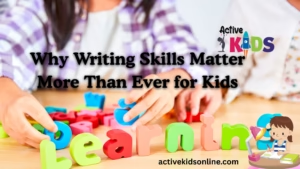
Why Writing Skills Matter More Than Ever
In an increasingly digital world, you might think writing would become less important. The opposite is true. Communication is dominated by written text—emails, messages, social media, reports. The ability to write clearly, persuasively, and creatively determines success in academics, careers, and personal relationships.
Beyond pragmatic communication, writing is a thinking tool. When children write, they organize their thoughts, develop arguments, and explore ideas. This process strengthens cognitive development in ways that passive consumption of information cannot. Research consistently shows that students who write regularly demonstrate stronger critical thinking, better problem-solving abilities, and improved academic performance across subjects.
The Gap Between School Writing and Effective Writing
Most UAE schools teach writing through structured curricula focused on specific genres (essays, narratives, reports) and grammar rules. This approach has merit, but it often leaves gaps. Many children understand the rules but struggle to apply them meaningfully. Others excel at grammar yet cannot write a compelling story or clear explanation. Many freeze when asked to write anything beyond what they’ve practiced in class.
Quality writing classes for kids bridge these gaps. They teach the mechanics, certainly, but they also teach the art of writing—how to engage readers, how to structure ideas persuasively, how to use language as a tool for specific purposes. They teach writing as problem-solving, not just rule-following.
Building Writing Confidence from the Ground Up
Confidence is foundational to writing ability. A child who believes they’re “not a good writer” often writes poorly—not because they lack ability, but because anxiety interferes with thinking and creation. Conversely, a child who feels safe to make mistakes, who receives encouragement, and who sees evidence of their own progress becomes increasingly confident.
Good writing classes for kids build confidence systematically. Early activities focus on low-stakes writing—journaling, creative prompts, playful exercises—where there’s no “wrong” answer. As confidence builds, gradually more structure is introduced. The progression ensures children feel successful at each stage.
Additionally, when children see their writing improve—when they notice themselves using more interesting vocabulary, creating more detailed descriptions, or structuring their ideas more clearly—confidence naturally grows. Instructors in quality writing classes highlight this progress explicitly: “See how you used three descriptive adjectives here? That makes the reader really see what you’re describing.”
How Writing Classes Support Academic Success
Parents invest in writing classes for kids primarily for academic reasons, and rightfully so. Strong writing skills are foundational to success across subjects. In literature classes, writing helps students analyze texts and express interpretations. In science classes, writing lab reports develops explanatory ability. In history and social studies, essays require organizing evidence and constructing arguments.
Here’s the powerful connection: creative writing skills transfer directly to academic writing. When children learn to think about audience and purpose in creative writing—”Who will read this story, and what do I want them to feel?”—they develop exactly the mindset needed for academic writing. When they learn to structure a narrative with a beginning, middle, and end, they’re essentially learning to structure a persuasive essay (with introduction, body, and conclusion). When they learn to revise and improve their creative work, they’re developing the editing skills that produce stronger academic writing.
Research supports this. Studies show that students receiving creative writing instruction improve not only in creative writing but in academic writing performance. One reason is attitude: if you’ve experienced writing as engaging and creative, you approach academic writing with a different mindset than if writing has only been a dreaded assignment.
Developing Communication Skills That Last a Lifetime
Writing classes for kids do something deeper than improving grades. They develop communication capabilities that will serve children throughout their lives. In the workplace, success increasingly depends on the ability to write clearly—emails, reports, proposals, presentations. In academics at university level, writing is even more central. In personal life, the ability to articulate thoughts and feelings supports stronger relationships and better self-understanding.
When children learn in writing classes that their words matter, that clear communication matters, and that revision and refinement are normal and valuable, they internalize lessons about communication that shape their entire approach to expressing themselves.
The Practice Factor
Writing skill develops through consistent practice, feedback, and revision. Sporadic writing—even thorough writing assignments once or twice per term—doesn’t build skill the way regular writing does. Writing classes for kids provide the consistent practice environment that busy schedules often don’t allow.
Moreover, quality instruction provides something crucial: specific, actionable feedback. A teacher with 40 students can’t provide detailed feedback on every writing assignment. Writing classes, particularly smaller group classes or one-on-one instruction, offer the feedback that helps children understand specifically what they did well and what to improve.
Building Self-Expression and Personal Voice
Perhaps the most overlooked value of writing classes for kids is they develop personal voice. Many children, especially in structured school environments, learn to write what they think teachers want to read rather than what they genuinely think. Good writing classes for kids give permission for authentic expression.
A teacher might say: “What do YOU think about this? Not what the textbook says—what’s your genuine reaction?” This invitation to genuine thinking transforms writing from performance for grades into communication of real thoughts and feelings.
Different Types of Writing for Different Learners
Effective writing classes introduce children to various writing forms—creative storytelling, poetry, journaling, descriptive writing, persuasive essays, explanatory writing. This variety serves important purposes. First, it helps children discover what type of writing resonates with them. A child who finds traditional essay writing tedious might love poetry or creative storytelling. Second, it develops adaptability—the ability to adjust writing style and approach for different purposes and audiences, an essential real-world skill.
Conclusion
Writing classes for kids are one of the most valuable investments parents can make in their child’s education. Unlike specialized tutoring aimed at specific test performance, quality writing classes develop foundational skills that benefit children across their entire academic journey and throughout their lives.
The advantages are multifaceted. Academically, strong writing skills directly improve performance across all subjects, from science to social studies to literature. Developmentally, writing instruction builds confidence, self-expression, and critical thinking. Practically, writing abilities determine success in education and careers. Personally, learning to articulate thoughts and feelings through writing supports emotional intelligence and self-understanding.
For UAE families navigating multiple school curricula and high academic expectations, writing classes for kids offer something particularly valuable: structured support for one of the most essential skills. In a system where children are often pushed toward standardized performance, writing classes can also be spaces where authentic voice is celebrated, where creativity is encouraged, and where each child discovers they have something meaningful to communicate.
The transformation parents often witness mirrors what Ravi observed in his son: reluctant writers becoming engaged learners. Children who dreaded the blank page come to see it as a space of possibility. Students who struggled with writing assignments suddenly accessed their own ideas more clearly. Shy children find confidence through written expression.
If your child is struggling with writing, showing little enthusiasm for writing assignments, or simply reaching a new level in their writing journey, enrolling them in structured writing classes for kids can be transformative. Quality instruction, consistent practice, supportive feedback, and exposure to various writing forms work together to develop writers who are confident, capable, and genuinely engaged with the power of words.
The most successful students aren’t just good at following instructions—they’re good at expressing themselves clearly, thinking critically, and communicating persuasively. Writing classes for kids build these foundational skills during the formative years when learning accelerates and confidence solidifies, setting up your child for academic success and lifelong capability in communication and creative thinking.
Writing Classes for Kids: FAQs for Parents
What are writing classes for kids?
Writing classes help kids improve writing through stories, activities, and guided practice—making writing easier, more fun, and more confident.
What age is best to start writing classes?
Most kids can start from 6–7 years old, once they begin forming sentences and sharing ideas in writing.
How are writing classes different from school writing?
School focuses on exams and rules. Writing classes focus on confidence, creativity, and clear expression, not just marks.
Do writing classes help with school grades?
Yes. Strong writing improves performance in English, science, and social studies, where clear answers and explanations matter.
Are writing classes useful if my child already writes well?
Yes. They help strong writers improve structure, vocabulary, and personal voice across different writing styles.
How do writing classes build confidence?
Kids get positive feedback, regular practice, and a safe space to make mistakes—helping them enjoy writing without fear.