
Introduction:
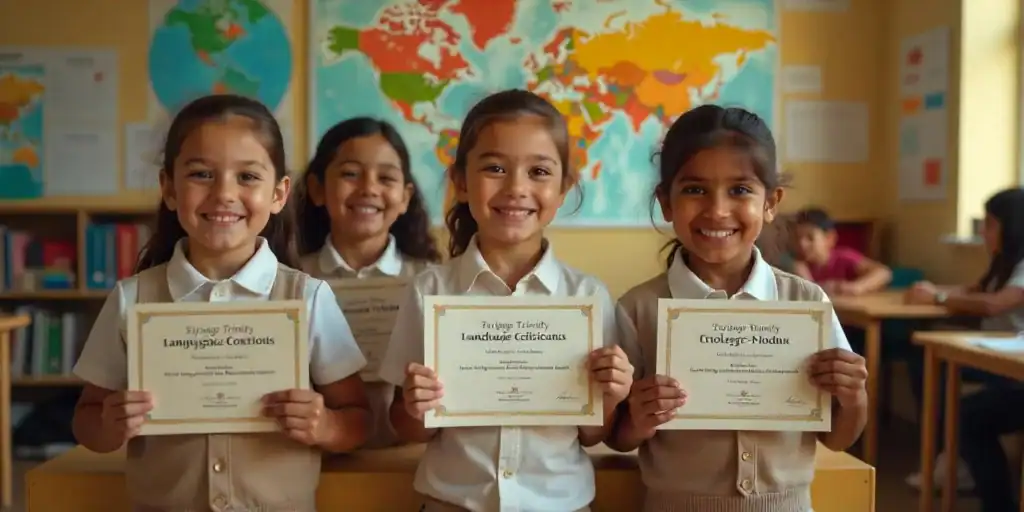
You’ve heard about Trinity certification for kids and wonder: Is it really worth the investment? Will it make a real difference in your child’s future? Thousands of parents in the UAE and globally face this same question. Trinity certification for kids represents a financial commitment—both time and money and parents rightfully want to know if it delivers genuine value. The answer is more nuanced than a simple yes or no. Trinity certification for kids offers tremendous benefits for certain children at certain stages, but it’s not universally necessary. This comprehensive guide analyzes Trinity certification for kids honestly: what it is, its actual benefits, realistic costs, and most importantly, whether it’s the right investment for YOUR specific child.
Understanding What Trinity Certification for Kids Actually Is
BBefore evaluating whether Trinity certification for kids is worth it, you need to understand what you’re actually investing in.
Trinity College London Background:
Trinity College London is an internationally recognized examination body that has existed since 1877. It’s different from typical school exams. Trinity operates in over 60 countries and certifies over 850,000 learners annually. When parents invest in Trinity certification for kids, they’re pursuing credentials from a globally respected institution—not a commercial course provider.
What Trinity Certifies:
Trinity certification for kids focuses specifically on spoken English and drama communication skills. There are different levels:
- Trinity Initial (for young learners, ages 5-8)
- Trinity Grade 1-5 (progressive difficulty, ages 8-14)
- Trinity Grade 6-12 (advanced levels, ages 14+)
Each level tests different communication competencies: recitation, prepared material, impromptu speaking, interaction, and sometimes drama elements.
How Exams Work:
Trinity certification for kids exams are one-on-one with a Trinity examiner (not a classroom test). Your child presents prepared material, responds to questions, and demonstrates communication skills in a conversational format. The personalized nature of Trinity certification for kids exams is markedly different from standardized testing.
What You’re NOT Getting:
Important clarification: Trinity certification for kids doesn’t include traditional academic subjects like math or science. It’s specifically for communication and speaking skills certification. Parents sometimes think Trinity certification for kids is a comprehensive education credential—it’s not. It’s a specialized credential in one important area.
Recognition and Validity:
Here’s the critical question: Are Trinity certification for kids credentials actually recognized? Yes—by universities, employers, and educational institutions worldwide. Many universities in the UK, Australia, and other countries recognize Trinity certifications. Employers value candidates with demonstrated communication skills. In the UAE specifically, many schools recognize Trinity credentials as evidence of English proficiency.
Understanding exactly what Trinity certification for kids is (and isn’t) is the foundation for deciding if it’s worth your investment.
The Real Benefits of Trinity Certification for Kids
Setting aside marketing claims, what are the actual, measurable benefits of Trinity certification for kids?
Structured Communication Framework:
Trinity certification for kids provides a clear framework for developing communication skills. Rather than vague goals like “improve English,” Trinity certification for kids offers specific competencies to develop. Each level has defined expectations. This structure helps both students and teachers maintain focus.
Motivation and Goal-Setting:
Working toward Trinity certification for kids gives children concrete goals. Unlike open-ended learning, Trinity certification for kids provides a finish line. Many children are motivated by working toward certification. The visible progress and achievable milestones in Trinity certification for kids keep motivation high.
Accountability and Quality Assurance:
Because Trinity certification for kids is externally administered by trained examiners, there’s accountability. Your child’s progress isn’t just subjective teacher opinion; it’s evaluated against international standards. This external validation matters, especially for anxious parents wondering, “Is my child really progressing?”
Development of Specific Competencies:
Trinity certification for kids systematically develops skills many children need:
- Confident public speaking
- Clear articulation and pronunciation
- Ability to think on feet (impromptu speaking sections)
- Prepared presentation skills
- Interactive communication
- Sometimes drama and performance
These specific competencies are marketable and valuable.
International Recognition:
This is significant: Trinity certification for kids is recognized globally. If your family moves internationally, these credentials travel with your child. Universities and employers worldwide recognize Trinity certifications. This is unlike local certifications or school-specific credentials.
Building Academic Confidence:
Many children who pursue Trinity certification for kids report increased confidence in all academic areas. Succeeding in Trinity certification for kids proves to children that they CAN achieve challenging goals. This confidence transfers.
Portfolio Building:
For older children and teenagers, Trinity certification for kids becomes part of educational portfolio. College applications value demonstrated communication skills. Certifications show commitment and achievement beyond just grades.
Self-Awareness and Personal Development:
The process of preparing for Trinity certification for kids requires self-reflection. Students evaluate their strengths, identify areas for improvement, and work deliberately on skill development. This metacognitive awareness is valuable beyond the certification itself.
The Cost Analysis – What You’re Actually Investing
Parents considering Trinity certification for kids need realistic cost understanding.
Examination Fees:
The exam fee for Trinity certification for kids varies by level and location. In the UAE, expect:
- Trinity Initial: approximately 400-500 AED
- Trinity Grades 1-3: approximately 500-650 AED
- Trinity Grades 4-5: approximately 650-800 AED
These are exam fees only—what you pay to take the test.
Preparation Costs:
Most children need preparation for Trinity certification for kids. Options include:
- Self-preparation: Zero cost (only feasible for highly motivated, older students)
- School-based Trinity programs: Often included in curriculum; no additional cost
- Private tutoring: 100-300 AED per hour, typically 10-20 hours needed
- Trinity certification classes: 1,500-3,500 AED for a comprehensive course
Total preparation costs vary dramatically based on your approach.
Total Investment per Level:
Realistic total investment for Trinity certification for kids (exam + decent preparation):
- Entry level (Trinity Initial): 1,500-2,500 AED
- Intermediate level (Grades 1-3): 2,000-3,500 AED
- Higher levels (Grades 4-5): 2,500-4,000 AED
If pursuing multiple levels (typically one per year), cumulative investment over several years can be substantial.
Important Context:
These costs should be compared to other educational investments:
- Private school annual tuition: 20,000-60,000+ AED
- Music lessons and certifications: 3,000-6,000 AED annually
- Various online courses and tutoring: 1,000-5,000 AED annually
In this context, Trinity certification for kids costs are moderate for serious educational investment.
The ROI Question – Is It Worth the Investment?
The critical question: Is Trinity certification for kids worth the investment? The honest answer is: it depends on your child and situation.
Trinity Certification for Kids IS Worth It If:
- Your child is already studying English and communication (why not certify their learning?)
- Your child’s school includes Trinity programs (no additional cost for preparation)
- Your child is interested in speaking, performance, or communication careers
- Your child values external validation and motivation (certification goal helps)
- Your family plans international mobility (global recognition matters)
- Your child is preparing for university (some universities value Trinity credentials)
- Your child lacks confidence and needs structured skill-building framework
- Your child is in a competitive academic environment where additional credentials differentiate them
- Your family can afford the investment without financial stress
Trinity Certification for Kids Is QUESTIONABLE If:
- Your child already has strong communication skills (less value in additional certification)
- Your family cannot afford without financial strain (stress outweighs benefits)
- Your child is resistant or unmotivated (forced certification creates resentment)
- Your child attends non-Trinity schools where it’s not integrated (standalone investment)
- Your primary goal is academic grades (Trinity doesn’t impact school performance)
- Your child is already overcommitted and stressed
- There are more pressing educational needs (basic skills before certification)
Trinity Certification for Kids Is LIKELY NOT Worth It If:
- It’s pursued to impress others rather than for genuine benefits
- Your child is already anxious or struggling (adds pressure without supporting primary needs)
- You’re comparing it to direct academic support that’s truly needed
- Your child has zero interest in communication or speaking fields
- You’re in a situation where it won’t be recognized or valued
- Pursuing it requires sacrificing other important activities or family wellness
The honest ROI analysis: Trinity certification for kids has genuine value IF you have the right child at the right stage for the right reasons.
What Parents Don’t Always Realize About Trinity Certification for Kids
Beyond obvious benefits, several aspects of Trinity certification for kids are worth understanding:
Preparation Matters More Than Certification:
Here’s a truth many parents discover: the PREPARATION for Trinity certification for kids is actually more valuable than the certification itself. During preparation, your child systematically develops communication skills. Whether they ultimately sit for the exam or not, the skill development is real and valuable. Some parents wisely focus on the preparation benefits rather than fixating on certification results.
One-on-One Exam Format Advantages:
The individualized exam format of Trinity certification for kids is uniquely valuable. Unlike standardized tests, Trinity certification for kids evaluators observe your child closely. Shy kids sometimes perform better in one-on-one format because there’s no peer audience. This is an often-overlooked advantage of Trinity certification for kids.
Grades Don’t Guarantee Success:
Some children do very well in preparation but struggle with exams due to nervousness. Trinity certification for kids results don’t always reflect true ability—sometimes they reflect exam performance under pressure. Parents should understand this isn’t a perfect measure of their child’s actual skills.
International Variations:
Trinity certification for kids is recognized differently in different countries. In the UK, Australia, and Canada, recognition is strong. In the UAE, recognition is growing but varies by institution. Before investing heavily, research actual recognition in YOUR context.
Levels Progress Differently:
Some children progress quickly through early Trinity certification for kids levels but find later levels much harder. Others plateau. Understanding that progression isn’t linear helps manage expectations.
Alternative Credentials Exist:
Trinity certification for kids isn’t the only communication credential available. IELTS, Cambridge English, and other certifications exist. Understanding your options helps ensure Trinity certification for kids is actually the right choice for your child.
Success Stories – When Trinity Certification for Kids Transforms Lives
While Trinity certification for kids isn’t universally necessary, for certain children it’s genuinely transformative.
Aisha’s Story:
Aisha was a brilliant student academically but terrified of public speaking. Her parents enrolled her in Trinity certification for kids preparation. Preparing for the exam gave her structured practice in speaking. By the time she sat for Trinity Grade 3, her confidence had transformed. She passed with excellence and more importantly, speaking anxiety largely disappeared. She now participates confidently in class discussions. “Trinity certification for kids gave her the framework to overcome her fear,” her mother noted.
Rohan’s Case:
Rohan moved to the UAE from India where English wasn’t his first language. While he learned English quickly, he lacked confidence. Pursuing Trinity certification for kids gave him a goal and external validation. Successfully passing Trinity certifications proved to him he could handle English at high levels. By Trinity Grade 4, he was tutoring other students in English. The certifications were stepping stones to genuine competence.
Leila’s Achievement:
Leila aspired to study broadcast journalism in university. Her parents invested in Trinity certification for kids preparation, knowing communication credentials matter for media careers. By Trinity Grade 5, Leila had certifications demonstrating advanced communication skills. When she applied to universities, these credentials supported her applications. She was accepted to her first-choice university program. The certification directly supported her career trajectory.
Amaan’s Transformation:
Amaan was shy and withdrawn. His parents weren’t sure if pushing Trinity certification for kids was right, but a teacher recommended it. The preparation process required him to speak, present, and engage. Over months, his personality emerged. By the time he completed his first Trinity certification, he was visibly more confident. His parents saw personality changes that went far beyond speaking skills. For Amaan, Trinity certification for kids was unexpectedly transformative.
These stories share a theme: Trinity certification for kids works best when it aligns with children’s genuine needs or aspirations.
Making the Decision – Questions to Ask Yourself
Before investing in Trinity certification for kids, parents should ask themselves:
About Your Child:
- Is my child interested in speaking, performance, or communication?
- Does my child value external recognition and certificates?
- Is my child currently anxious about communication (could use structured support)?
- Does my child have time for preparation alongside other commitments?
- Is my child motivated by goals and benchmarks?
- Does my child already have strong communication skills (what would Trinity add)?
- Would my child resent being pushed toward Trinity, or would they be interested?
About Your Situation:
- Can we afford Trinity certification for kids without financial stress?
- Does my child’s school include Trinity programs (reducing preparation costs)?
- Will we be moving internationally (making global recognition valuable)?
- Are we in an academic community where Trinity credentials are valued?
- Are there more pressing educational needs we should address first?
- Do we have time for preparation without overcommitting our family?
About Your Motivations:
- Am I pursuing Trinity certification for kids for my child’s benefit or to impress others?
- Is this aligned with my child’s genuine interests and goals?
- Am I clear on what Trinity certification for kids will and won’t do for my child?
- Have I researched whether Trinity is actually recognized where it matters for my child?
- Am I prepared to support my child through preparation, even if they don’t pass?
Honest answers to these questions guide whether Trinity certification for kids is right for you.
Conclusion:
Is Trinity certification for kids worth the investment? The answer is: sometimes yes, sometimes no it depends on YOUR specific child, situation, and motivations. For children who are naturally interested in communication, whose schools offer Trinity programs, or who want global credentials, Trinity certification for kids offers genuine value. For others, resources might be better directed elsewhere.
What’s universally true: the PROCESS of preparing for Trinity certification for kids—developing communication skills, building confidence, and practicing speaking IS valuable. Whether your child ultimately sits for the exam matters less than whether they develop genuine speaking confidence and competence through the preparation.
If you’re considering Trinity certification for kids, approach it thoughtfully. Don’t pursue it because other families are or because you think it’s expected. Pursue it because it genuinely serves your child’s development, aligns with their interests, and fits within your family’s capacity and resources.
If you do invest in Trinity certification for kids, choose quality preparation. The exam is only valuable if proper preparation precedes it. Work with experienced instructors who understand your child’s individual needs. Focus on genuine skill development, not just exam passing.
Your child’s communication confidence and competence matter far more than any certification. Whether Trinity certification for kids is part of that development depends on your unique situation. Make the decision that serves YOUR child’s actual needs not external expectations.
FAQs: Trinity Certification For Kids: Investment Worth Making?
What is Trinity certification for kids?
Trinity certification for kids is an internationally recognized qualification awarded by Trinity College London that assesses a child’s spoken English, communication, and sometimes drama skills through one-on-one exams.
At what age can children start Trinity certification?
Children can start Trinity certification for kids as early as 5 years old with Trinity Initial levels. The program progresses through higher grades suitable for teenagers and young adults.
Does Trinity certification help with school grades?
Trinity certification for kids does not directly affect academic grades, but it often improves confidence, presentation skills, and classroom participation, which can positively influence overall academic performance.
Is Trinity certification for kids recognized internationally?
Yes. Trinity certification for kids is recognized by schools, universities, and employers worldwide, including in the UK, Australia, Canada, and many institutions in the UAE.
Is Trinity certification suitable for shy or introverted children?
Yes. Many shy children thrive with Trinity certification for kids because the exam format is one-on-one, which can feel less intimidating than group assessments or public speaking.