
Quick Summary: Introversion isn’t a flaw to be fixed, but communication anxiety can hold a brilliant child back. Speech training for introverted kids focuses on providing structured tools—like the P.R.E.P. method and gradual exposure—to help them share their thoughts with clarity and certainty, without forcing them to “become extroverts.”
Does your child sink into their chair when the teacher asks a question, even though they know the answer? It’s a common heartbreak for parents: watching a brilliant, observant child stay silent while the loudest voices take the lead.
There is a vital distinction to make: Introversion is a personality trait; communication anxiety is a hurdle. Speech training for introverted kids isn’t about “fixing” them or making them loud. It’s about giving them the tools to navigate an extroverted world with quiet authority. In this guide, we’ll explore how gentle, specialized coaching helps your child find their voice—not by changing their nature, but by building their certainty.
Introversion vs. Shyness: What’s the Real Difference?
For many parents, the terms “introverted” and “shy” are used interchangeably, but in the world of child development, they represent two very different internal experiences. Understanding this distinction is the first step in supporting your child effectively.
Introversion is a personality trait related to energy. An introverted child isn’t necessarily afraid of people; they simply find social interaction draining and require “down time” to recharge. They are often deep thinkers, highly observant, and prefer one-on-one conversations over large groups.
Shyness, on the other hand, is driven by fear or anxiety. It is the discomfort or awkwardness a child feels when they are worried about being judged, criticized, or rejected by others. While an introvert chooses to be quiet because they are processing, a shy child often wants to speak but feels held back by an internal wall of “what-ifs.”
Common Misconceptions
A major misconception is that introverts lack social skills or dislike people. In reality, many introverts have excellent social awareness—they just prefer quality over quantity. In a school environment, teachers may mistake a child’s silence for a lack of knowledge or disinterest. This misunderstanding can lead to “participation” grades that don’t reflect the child’s true potential, further discouraging them from engaging.
By recognizing whether your child is simply an introvert who needs a different approach, or a shy child dealing with social anxiety, you can tailor your support to help them thrive in their own unique way.
Why Introverted Kids Struggle With Speaking Situations
It’s often heartbreaking for a parent to know their child has a “voice” at home—full of jokes, stories, and insights—only to see that voice disappear the moment they step into a public or academic setting. This “shutdown” usually happens because of a few specific psychological and environmental triggers.
The Weight of Overthinking and Judgment
Introverted children are naturally reflective. While this is a strength in academic work, it can be a hurdle in spontaneous speaking. They don’t just “say” things; they process them. This often leads to overthinking, where the child plays out every possible reaction from their peers before they even open their mouth. If they fear they might be judged or that their answer isn’t “perfect,” they often decide that silence is the safest option.
The “Loudness” of the Modern Classroom
Most modern school environments are designed for extroverts. Open-plan classrooms, group projects, and “shout-out” participation styles reward quick, loud responses. For an introverted child, this environment is overstimulating. They aren’t just trying to think of an answer; they are also trying to navigate:
- Performance Anxiety: The feeling of being “on stage” when called upon unexpectedly.
- Social Comparison: Seeing peers speak effortlessly and feeling “behind” or “different.”
- High-Pressure Environments: Rapid-fire questioning that doesn’t allow for their natural processing time.
The Long-Term Impact
If these struggles aren’t addressed with empathy, communication anxiety can become a “default” setting. Over time, a child might start to self-identify as “the quiet one who doesn’t speak,” avoiding leadership roles or collaborative opportunities throughout their education and into their adult careers. Speech training steps in here—not to change who they are, but to ensure these hurdles don’t block their path.
How Speech Training Helps Introverted Kids Build Confidence
If the classroom feels like a chaotic stage, speech training acts as a controlled rehearsal. The goal is to move a child from a state of “threat” (fear of being watched) to a state of “safety” (confidence in their ability).
Unlike a high-pressure school presentation, professional speech training provides a structured, low-stakes environment. Here is how that specialized approach bridges the gap:
1. A Safe Space for Expression
Introverted children often feel “exposed” when they speak. In a speech training setting—specifically those that utilize one-on-one or small-group formats—the audience is curated and supportive. This removes the fear of being mocked by a large group of peers, allowing the child to focus on their message rather than their surroundings.
2. Focus on Clarity, Not Volume
A common mistake is telling a quiet child to “just speak louder.” This can feel invasive and aggressive to an introvert. Effective speech training focuses on clarity and articulation first. When a child learns how to form their words and structure their thoughts, the natural volume follows because they feel certain about what they are saying.
3. Confidence Through Preparation
Introverts thrive on preparation. Speech training teaches them how to organize their thoughts using frameworks. When a child has a “mental map” of what they want to say, the anxiety of “blanking out” disappears. They realize they don’t have to be spontaneous; they just have to be prepared.
4. Gradual Exposure (The “Ladder” Approach)
Rather than being thrown into the deep end, children are guided through gradual exposure. This might look like:
- Step 1: Sharing a thought with just the mentor.
- Step 2: Reading a short story to one peer.
- Step 3: Presenting a topic they love to a small, familiar group.
By the time they reach a “public” speaking moment, they’ve already succeeded dozens of times in smaller ways.
Proven Speech Training Techniques for Introverted Personalities
For an introverted child, the “gift of gab” isn’t something they are born with—it’s something they build through specific, repeatable techniques. These exercises aren’t about flashy performances; they are about giving the child a sense of control over their voice and their thoughts.
1. Thought Organization Frameworks
One of the biggest fears for introverted kids is “mind blanking.” We teach them simple structures like the P.R.E.P. method (Point, Reason, Example, Point). Having a mental formula to follow acts like a safety net, allowing them to organize their thoughts quickly even when they feel put on the spot.
2. Low-Pressure Role-Play
We use storytelling and role-play to take the focus off the child’s “self” and put it onto a “character.” When a child is pretending to be a scientist explaining an experiment or a travel guide describing a jungle, they often forget to be self-conscious. This “play-based” learning builds the muscle memory of speaking without the weight of personal judgment.
3. Breathing and Voice Control
Anxiety often leads to shallow breathing, which makes the voice shaky and quiet. We teach children simple diaphragmatic breathing (or “belly breathing”). This doesn’t just make their voice stronger; it actually signals to their nervous system that they are safe, physically lowering their heart rate and calming their nerves before they speak.
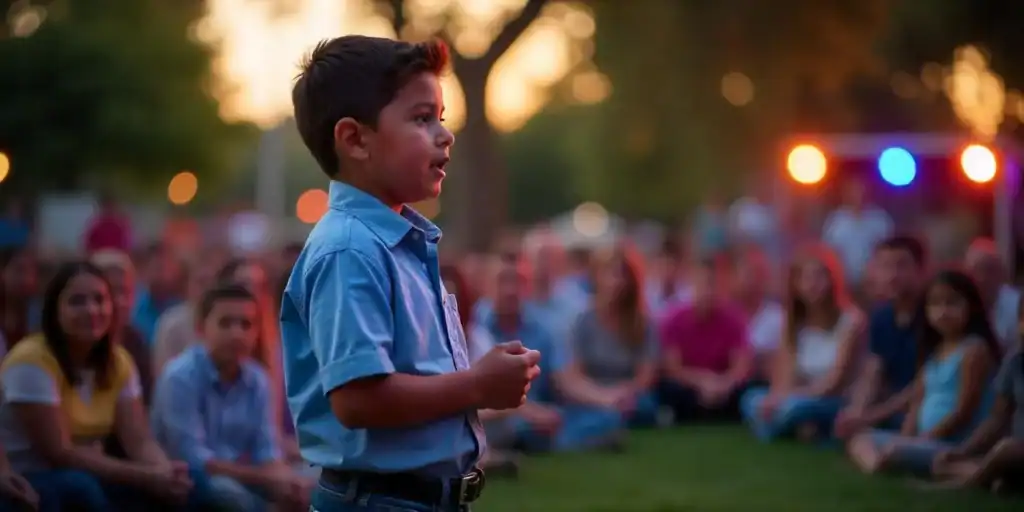
4. The Power of “Micro-Speeches”
Instead of starting with a five-minute presentation, we start with 30-second “micro-speeches” about things they love—like Minecraft, a favorite book, or their pet. By speaking about a “safe” topic they are already experts in, they associate public speaking with feelings of interest and pride rather than fear.
5. Intentional Pausing
Many introverts feel rushed to answer immediately. We teach them that pausing is a power move. Taking three seconds to breathe and think before speaking shows confidence and gives their brain the time it needs to process, preventing the “um” and “uh” fillers that often come from nervousness.
Real-Life Success Examples
Sometimes, the best way to see the impact of speech training is through the stories of the children who have walked this path. While every child’s journey is unique, the transformation from “silent observer” to “confident communicator” usually follows a beautiful, steady arc.
From Avoiding to Leading: Leo’s Story
Leo was an 8-year-old who was exceptionally bright but would turn bright red and look at the floor whenever a teacher asked him a question. His parents were worried he was being overlooked in class.
- The Approach: We started with one-on-one sessions focusing on his passion for marine biology.
- The Turning Point: After six weeks of practicing “micro-speeches,” Leo realized he cared more about sharing facts about the Giant Squid than he did about the fear of being looked at.
- The Result: Three months later, Leo volunteered to be the spokesperson for his group’s science project. He didn’t become the loudest kid in class, but he became one of the most respected.
The Expressive Storyteller: Maya’s Journey
Maya, age 10, was described by her parents as “the family comedian” at home but “invisible” at school. She had a wall of communication anxiety that made her voice almost a whisper in public.
- The Approach: We used storytelling techniques and role-play to help Maya “step into” a character. This allowed her to separate her personal identity from the act of speaking.
- The Result: By the end of the term, Maya participated in a regional poetry recital. Her voice was steady, and more importantly, she walked off the stage with a massive smile, asking, “When can I do that again?”
These stories highlight a vital truth: Transformation isn’t about perfection; it’s about a shift in how a child sees themselves.
Key Benefits of Speech Training for Shy & Introverted Kids
While the primary goal of speech training is often to help a child “speak up,” the secondary benefits ripple into every area of their life. For an introverted child, these skills act as a “social toolkit” they can carry into adulthood.
- Improved Self-Confidence: The biggest win isn’t just better speaking; it’s the realization that “I can do hard things.” This self-assurance transfers to sports, hobbies, and new social situations.
- Active School Participation: Once the fear of judgment is lowered, kids start sharing their ideas in class. This leads to better teacher-student relationships and grades that truly reflect their intelligence.
- Reduced Communication Anxiety: By learning to control their breathing and organize their thoughts, the physical “fight or flight” response to speaking is significantly diminished.
- Stronger Social Connections: Speech training helps kids navigate one-on-one and group dynamics, making it easier to initiate friendships and express their needs to peers.
- Foundational Leadership Skills: Introverts often make the best leaders because they listen well. Speech training gives them the clarity and presence needed to lead with quiet authority.
How Long Does It Take to See Results?
Every child is on their own timeline, and because introverted kids process things deeply, they often internalize skills before they “show” them externally. However, parents typically notice a progression of confidence milestones:
The Confidence Timeline
- 2–4 Weeks (The Comfort Phase): You’ll notice your child is more willing to attend sessions and may start sharing “fun facts” about what they learned. The resistance to speaking begins to fade.
- 1–3 Months (The Visibility Phase): This is when “real world” changes happen. You might hear from a teacher that they raised their hand, or notice they are more vocal during family dinners or at the grocery store.
- 6 Months+ (The Mastery Phase): Speaking becomes a skill rather than a source of stress. The child begins to develop their own unique “speaking style” and no longer avoids situations that involve public expression.
Consistency and low-pressure encouragement at home are the keys to maintaining this momentum.
Why Speak & Shine Works Especially Well for Introverted Kids
At Speak & Shine, we don’t believe in “breaking” a child’s silence. We believe in honoring it. Many traditional public speaking programs focus on high-energy, “stage-presence” style training that can feel overwhelming or even authentic to an introverted child. Our approach is different because it is designed with the introverted temperament in mind.
A Personalized, Gentle Approach
We recognize that every child has a different “starting line.” Our mentors are specifically trained to identify the nuances of introversion and shyness. We don’t push kids into the spotlight before they are ready; instead, we build the spotlight around them through:
- Small, Supportive Circles: We keep our groups small to ensure every child feels seen but not “watched.”
- Emotional Safety First: We prioritize a pressure-free environment where mistakes aren’t just okay—they are part of the learning process.
- Mentorship, Not Just Instruction: Our mentors act as “confidence coaches,” providing the emotional support needed to navigate social anxiety.
By focusing on the connection between the child and their mentor, we create a foundation of trust. Once a child feels safe, their natural curiosity and intelligence begin to flow into their speech.
How Parents Can Support Confidence at Home
While speech training provides the tools, the home environment is the “practice field” where those skills take root. Here are a few ways you can support your child’s journey without adding pressure:
- Avoid the “Shy” Label: When you label a child as shy, they often adopt it as a permanent identity. Instead of saying, “They’re just shy,” try saying, “They like to take their time to get comfortable.”
- Practice “Low-Stakes” Speaking: Ask your child to call a grandparent to share one thing about their day, or let them order their own meal at a restaurant. These small wins build up over time.
- Celebrate the Effort, Not the Performance: Instead of saying, “You were the best speaker,” try, “I’m so proud of how you took a deep breath and kept going even when you felt nervous.”
Listen Without Correcting: Give them space to finish their thoughts without interrupting or correcting their grammar. For an introvert, being truly heard is the greatest confidence booster of all.
Conclusion: Finding the Power in the Quiet
Confidence isn’t about being the loudest person in the room; it’s about knowing that what you have to say has value. For an introverted child, speech training isn’t a “fix”—it’s an unlock. It provides the key to a door they’ve been standing in front of for a long time.
By investing in gentle, structured speech training, you aren’t changing your child’s beautiful, reflective nature. You are simply ensuring that when they have a brilliant idea, a funny story, or a powerful insight, they have the confidence to share it with the world.
A Parent’s FAQs: How Speech Training for Introverted Kids
Will speech training force my introverted child to be someone they’re not?
Absolutely not. The goal of speech training for introverts isn’t to change their personality, but to provide them with a “social toolkit.” We focus on quiet authority—helping children express their deep thoughts and brilliant ideas with clarity and certainty, without requiring them to become the loudest person in the room.
How is introversion different from shyness or social anxiety?
Introversion is about energy (needing quiet time to recharge), whereas shyness and social anxiety are driven by fear or judgment. An introvert might have plenty to say but chooses not to; a shy child often wants to speak but feels blocked by an internal wall. Speech training helps bridge the gap for both by creating a safe, low-stakes environment to practice.
My child is a “chatterbox” at home but silent at school. Why?
This is very common! Home is a “safe zone” with no performance pressure. School classrooms, especially with “shout-out” participation styles, can be overstimulating for introverted children. They often overthink their responses to avoid being “wrong,” leading to a total shutdown in public settings.
What are some simple exercises I can do at home to help?
Start with “Micro-Speeches.” Ask your child to tell you about a topic they love (like a favorite game or book) for just 30 seconds. Focus on celebrating their effort and bravery rather than their performance. You can also practice “low-stakes” social moments, like letting them order their own meal at a restaurant.
How long does it take to see results in a child’s confidence?
Every child is unique, but most parents notice a “comfort phase” within the first 2 to 4 weeks. By the 3-month mark, many teachers report seeing more hand-raising and active participation in class. The goal is long-term mastery, where speaking becomes a skill they use rather than a stressor they avoid.
Help Your Child Find Their Voice
Don’t let communication anxiety hold back your child’s brilliant ideas. From “micro-speeches” to classroom confidence, our specialized training for introverted kids gets results. Book a free trial today and see the transformation for yourself.