
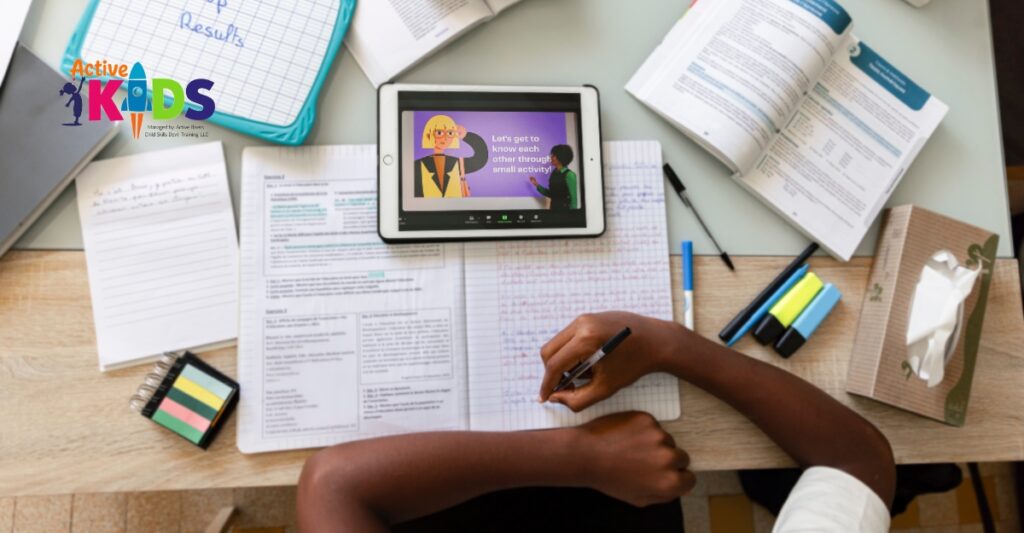
Many parents are surprised when their child can explain an idea beautifully in conversation but struggles to write even a few sentences on paper. You listen to your child spin an imaginative tale or describe a school project with passion, yet when they sit down with a pencil, the page remains blank. If this sounds familiar, you are likely wondering why children struggle to express their ideas in writing. This is an incredibly common challenge that parents face globally, from Dubai to international English-speaking communities. It is essential to recognize that writing difficulties in children do not indicate low intelligence. In fact, writing is one of the most complex, multi-layered skills children develop during their academic journey.
Why Writing Feels Harder Than Speaking for Many Children
To understand why a child struggles with writing, we must look at how speech and written communication differ fundamentally. Speaking is spontaneous, natural, and highly interactive. When a child speaks, they receive immediate feedback from their listener, use physical gestures, and can change direction mid-sentence without facing major structural consequences. Their thoughts flow directly into spoken words.
Writing, however, requires multiple high-level cognitive skills to happen simultaneously. When a child sits down to write, their brain must engage in idea generation, organizing thoughts, selecting precise words, managing sentence formation, and applying mechanical rules of spelling and grammar—all while physically controlling a pen or keyboard. When these processes collide, cognitive overload occurs. The fluid ideas they held in their mind suddenly get stuck behind a bottleneck of technical execution, making the entire experience feel deeply frustrating, taxing, and exhausting.
7 Common Reasons Children Struggle to Express Their Ideas in Writing
Limited Vocabulary
Sometimes, a child knows exactly what they want to convey conceptually, but they lack the precise words to express it on paper. Vocabulary development is a critical pillar of written communication skills for kids. Without a rich repository of words, children resort to repetitive language or choose to give up entirely. For example, instead of writing that a story character was “ecstatic,” “terrified,” or “anxious,” they might just use basic words like “good” or “bad.” This lack of nuance makes their writing feel flat to them, which dampens their enthusiasm for creative expression.
Difficulty Organizing Thoughts
For many reluctant writers, the issue isn’t a lack of brilliant ideas, but an abundance of scattered thoughts. Without strong storytelling skills and structured frameworks, they do not know where to begin or how to sequence events logically. A child might have an amazing concept for a narrative, but when forced to create a clear beginning, middle, and end, the task becomes entirely overwhelming. This structural disconnect makes organizing thoughts one of the biggest hurdles in early language development and formal academic writing.
Fear of Making Mistakes
Perfectionism can completely paralyze a young writer. Spelling anxiety, grammar worries, and fear of teacher correction often cause children to hold back their best ideas. Instead of focusing on creative expression, they worry excessively about whether they spelled a word correctly or placed a period in the right spot. This constant fear of judgment and correction dampens their enthusiasm, leading to a significant drop in their confidence in writing.
Weak Reading Habits
There is an undeniable, foundational reading and writing connection that shapes a child’s literacy journey. Reading exposes children to diverse sentence structures, varied vocabulary, and different narrative techniques. When children have weak reading habits, they miss out on this natural, passive blueprint for language. Regular reading acts as a seamless form of writing practice, teaching children subconsciously how authors construct ideas, build suspense, and convey complex emotions effectively.
Lack of Writing Practice
Modern lifestyles are increasingly screen-heavy, offering fewer opportunities for traditional, extended writing. When children rely heavily on touchscreens, voice-to-text features, and short-form text messaging, their fine motor skills and stamina for sustained written expression decrease. Furthermore, reduced creative writing activities in schools can mean children rarely get to write purely for enjoyment, turning writing into a strict chore rather than a form of creative expression.
Low Confidence
A child who has faced continuous writing difficulties in children will naturally develop deep-seated self-doubt. When they compare themselves to peers who seem to write effortlessly, their motivation plummets. Improving writing confidence in kids requires addressing this underlying emotional barrier, ensuring they feel safe to express their unique voice and experiment with language without immediate scrutiny or negative feedback.
Developing Language Skills
Writing development in children occurs in distinct, predictable stages. Younger learners and English language learners (ELL) face unique challenges as they navigate the core mechanics of a new language while trying to master academic writing skills. It is important for parents to recognize these natural developmental phases and provide patient, structured support rather than expecting immediate, error-free mastery.
Signs Your Child May Be Struggling with Written Expression
Identifying the signs of writing struggles early can help parents provide the right intervention before frustration turns into a permanent dislike for the subject. Look out for these common behavioral and academic indicators at home:
- Avoids writing tasks: Your child frequently procrastinates or finds excuses to avoid writing assignments entirely.
- Gives very short answers: They provide one-word or monosyllabic written responses despite having complex, detailed verbal ideas.
- Has strong verbal ideas but weak written responses: A stark contrast exists between their fluent verbal explanations and their sparse, simplistic written output.
- Becomes frustrated during homework: Homework sessions involving writing often lead to tears, emotional tantrums, or intense avoidance anxiety.
- Frequently says “I don’t know what to write”: They repeatedly stare at a blank page, insisting their mind is empty despite understanding the topic thoroughly.
How Writing Challenges Can Affect Academic Performance
When a child struggles with writing, the impact extends far beyond the English classroom. Written expression is the primary tool used to evaluate knowledge across almost all subjects, including school assignments, long-term project work, and exams. A child who fully understands complex scientific concepts or historical events may still receive poor grades simply because they cannot articulate their knowledge clearly on timed tests.
Furthermore, persistent writing difficulties can erode a child’s broader communication skills and lower their confidence in classroom participation. They may become highly reluctant to volunteer answers or share their perspectives, leading to a cycle of academic disengagement that affects their overall school performance.
Practical Ways Parents Can Help at Home
As a parent, you can play a pivotal, supportive role in helping kids express ideas in writing. By introducing low-stress, engaging activities at home, you can bridge the gap between their thoughts and the page. Here are actionable, expert-approved strategies to build their skills organically:
Encourage Daily Reading
Set aside 15 to 20 minutes every day for reading. For instance, pause to discuss how the author describes a character, highlighting the reading and writing connection naturally.
Ask Open-Ended Questions
Instead of prompting simple “yes” or “no” replies, ask deep, descriptive questions. For example, ask, “How would you describe the park today?” This fosters vocabulary development and critical thinking before they ever write.
Use Storytelling Activities
Engage in collaborative verbal storytelling games during family dinners. One person starts with a sentence, and the next person continues it, strengthening storytelling skills without the physical burden of writing.
Create a Judgment-Free Writing Environment
Provide a dedicated workspace stocked with colorful notebooks and unique gel pens. Let your child know that this specific space is for raw ideas, where spelling and grammar rules do not matter initially.
Celebrate Effort Before Perfection
Always praise your child’s creativity and effort before pointing out mechanical spelling mistakes. Affirmations like, “I love this adventurous word you chose!” go a very long way in improving writing confidence in kids.
Encourage Journaling
Gift your child a private journal where they can write about their daily adventures or sketch comic strips. This low-pressure writing practice normalizes using written words for personal enjoyment and self-expression.
Let Children Talk Before They Write
Before they begin an assignment, let them verbally dictate their main ideas to you while you type them out. Hearing their own thoughts articulated clearly helps them manage sentence formation when they put pen to paper.
How Creative Writing Activities Improve Written Expression
Developing creative writing skills for children acts as an effective gateway to overall academic success. Unlike rigid school prompts, creative writing encourages pure imagination, allowing children to take complete control of their narratives. Through creating original worlds, children naturally practice sentence structure and story organization without the pressure of a formal grade.
For instance, asking a child to describe a hidden treehouse prompts them to search for vivid adjectives, accelerating their vocabulary growth. This playful engagement exercises critical thinking, transforms reluctant writers into enthusiastic creators, and refines their broader communication skills, making formal school essays feel far less daunting over time.
When Extra Support Can Make a Difference
While home strategies are highly effective, some children experience persistent writing challenges that require more structured guidance. Ongoing frustration and a noticeable lack of progress despite consistent effort are clear indicators that external support could make a major difference. Rather than viewing extra help as remediation, think of it as targeted enrichment that unlocks their potential.
Structured enrichment programmes, such as those provided by Active Kids Online, offer children the exact tools and strategies they need to thrive. Specialized Creative Writing Classes and tailored Reading Programmes teach children how to organize ideas sequentially, expand their active vocabulary, and build lasting confidence. Similarly, targeted Spoken English Classes and Communication Skills Courses bridge the gap between verbal fluency and written competence, providing your child with the comprehensive support required for lifelong communication success.
Final Thoughts
Understanding why children struggle to express their ideas in writing is the first critical step toward unlocking their full potential. Writing struggles are incredibly common, and almost every child possesses brilliant ideas worth sharing—they simply need the right structured guidance, regular practice, and unwavering parental encouragement. Strong writing skills develop steadily over time, not overnight. By creating a supportive, judgment-free environment at home and celebrating their incremental progress, you can successfully transform writing from a stressful chore into an empowering tool for self-expression.