
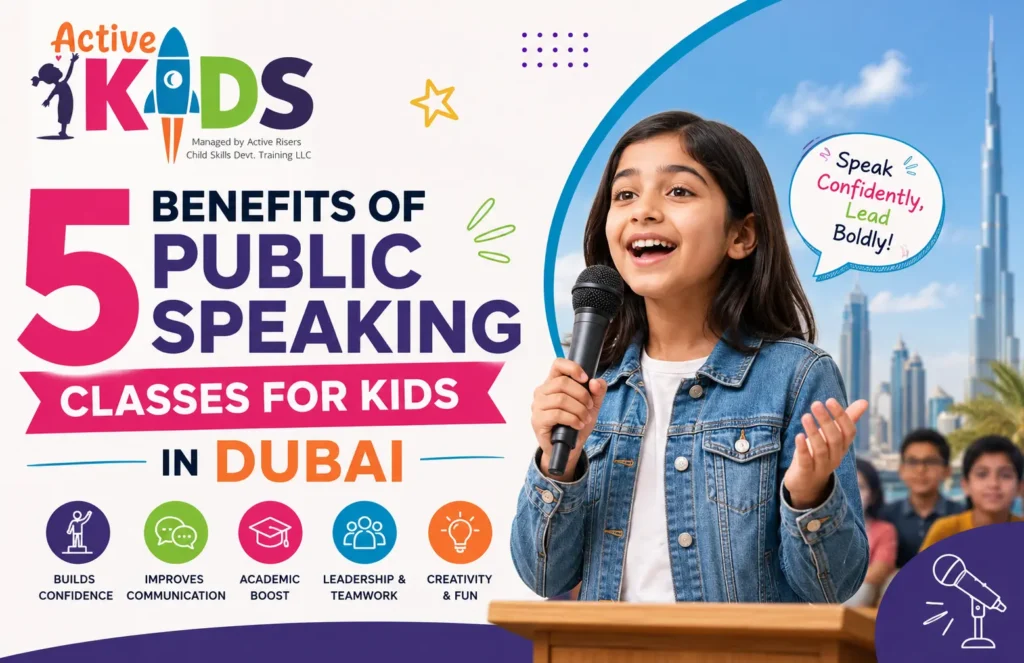
Many parents see the same challenge: their child may understand a topic well but struggle to explain it in front of a class. They may hesitate to raise their hand, become nervous during presentations, or find it difficult to organise their thoughts when speaking to a group. This is where public speaking classes kids in Dubai parents choose can make a meaningful difference.
Public speaking is not simply about delivering a speech. For children, it involves learning to express ideas clearly, listen actively, manage nervousness, and communicate with confidence. With regular, age-appropriate practice, children can become more comfortable speaking in front of others while developing communication skills that support them at school and beyond.
For parents considering public speaking programmes in Dubai, the key is finding an environment where children can practise these skills progressively rather than simply being asked to perform. Here are five important benefits to consider.
1. Builds Confidence and Reduces Stage Fright
Standing in front of a group can be intimidating for a child, particularly when they are worried about making a mistake or being judged by others. Nervousness may show up as a quiet voice, difficulty finding the right words, or avoiding opportunities to speak altogether.
Well-structured public speaking classes for kids in Dubai can help children become more comfortable through gradual, consistent practice. Instead of expecting a child to deliver a polished speech immediately, effective programmes introduce speaking activities in manageable stages.
Children may practise by:
- Speaking in small groups: Sharing ideas with a few peers before progressing to larger audiences.
- Learning to handle mistakes: Understanding that pauses, forgotten words, and small errors are normal parts of speaking.
- Receiving constructive feedback: Using specific guidance to improve delivery while recognising progress.
With repeated practice, children can learn to manage nervousness rather than simply avoid it. They begin to understand that confidence does not mean never feeling nervous; it means having the skills and preparation to speak despite those nerves.
This gradual approach is one reason public speaking for kids can be valuable beyond formal speeches. The confidence developed through speaking practice can support classroom participation, presentations, group activities, and everyday communication.
2. Improves Everyday Communication Skills
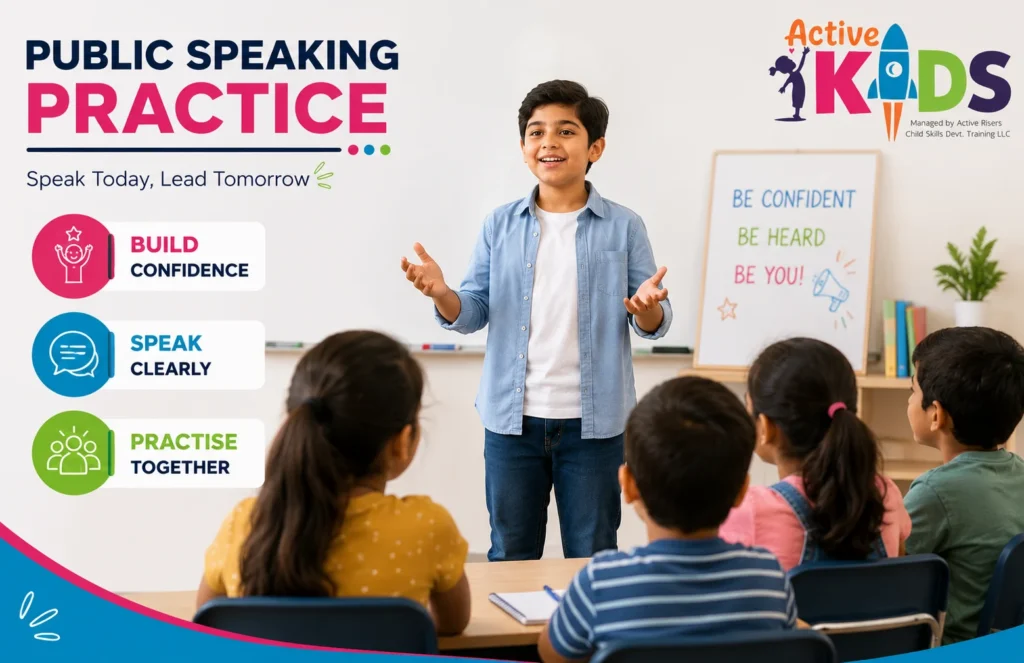
Public speaking is not only about standing on a stage. The same skills children practise when preparing a speech can help them communicate more clearly in everyday situations. They learn how to organise their thoughts, choose appropriate words, speak at a suitable pace, and respond thoughtfully to others.
Well-designed public speaking classes for kids in Dubai can develop these skills through practical activities that encourage children to:
- Organise their thoughts: Turn ideas into a clear beginning, middle, and conclusion instead of jumping between points.
- Speak with greater clarity: Practise volume, pace, pronunciation, and tone so their message is easier to understand.
- Listen actively: Pay attention to what others say and respond appropriately rather than simply waiting for their turn to speak.
- Express ideas confidently: Share opinions, explain experiences, and communicate their thoughts without relying on others to speak for them.
These skills can become useful well beyond the classroom. A child who learns to explain an idea clearly during a speaking activity may also find it easier to answer a teacher’s question, contribute to a group discussion, or explain something to friends and family.
For parents exploring public speaking for kids, this broader communication development is an important benefit. The goal is not simply to produce confident speakers on stage, but to help children become clearer and more capable communicators in everyday life.
3. Supports Academic Presentation and Project Skills
Children are often expected to explain ideas aloud at school, whether they are presenting a project, participating in a group assignment, answering questions, or speaking in front of classmates. Knowing the subject is important, but being able to communicate that knowledge clearly is another skill altogether.
Public speaking classes for kids in Dubai can give children practical opportunities to develop presentation skills before they need to use them in the classroom. Through guided speaking exercises, children can practise:
- Structuring presentations: Organising information into clear points that are easier for an audience to follow.
- Managing speaking pace: Learning when to slow down, pause, or emphasise an important point.
- Using eye contact and body language: Becoming more aware of how non-verbal communication affects a presentation.
- Explaining ideas clearly: Turning what they know into language that teachers and classmates can understand.
These skills do not guarantee higher grades, but they can help children communicate their knowledge more effectively. When presentation anxiety is reduced and children know how to structure their delivery, they can focus more attention on the content of their work.
For parents considering public speaking classes kids Dubai options, this makes presentation practice particularly relevant. The skills developed through structured speaking activities can support children when they face classroom presentations, projects, discussions, and other situations where they need to communicate their ideas clearly.
4. Develops Leadership and Teamwork Skills
Leadership is not simply about being the loudest person in a group. Children also need to know how to express an idea, listen to others, contribute to discussions, and work towards a shared goal. Public speaking activities can give them practical opportunities to develop these behaviours.
In public speaking classes for kids in Dubai, group discussions, presentations, and collaborative speaking exercises can encourage children to:
- Share ideas clearly: Explain their opinions while giving others an opportunity to contribute.
- Listen to different viewpoints: Understand that effective communication involves listening as well as speaking.
- Participate in group tasks: Take responsibility for presenting or explaining part of a shared project.
- Respond to feedback: Consider suggestions from instructors and peers and adjust their communication accordingly.
These experiences can help children become more comfortable contributing in group settings. They also reinforce an important lesson: effective leadership depends on communication, cooperation, and respect for others.
For children, this can be particularly useful during school projects and extracurricular activities, where success often depends on working with classmates rather than working alone. Public speaking for kids therefore offers opportunities to practise not only individual speaking skills, but also the collaborative habits that support effective teamwork.
5. Encourages Creativity Through Storytelling and Drama
Public speaking does not have to mean memorising speeches and standing behind a podium. For children, communication practice can be far more engaging when it includes creativity, storytelling, and drama.
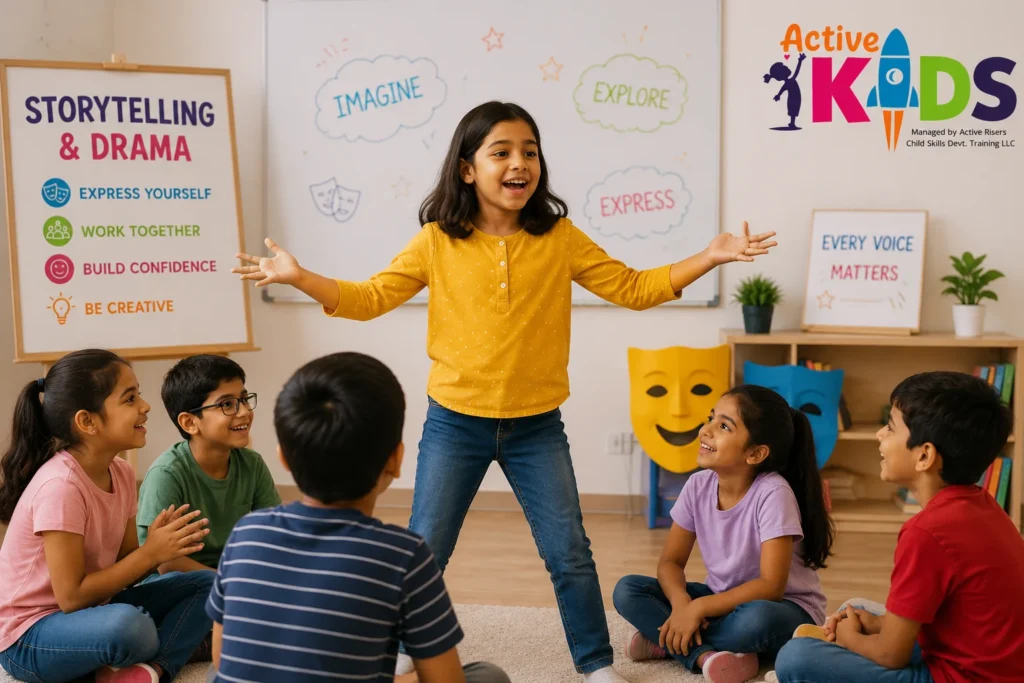
Activities such as role play, storytelling, improvisation, and character-based speaking allow children to experiment with different ways of expressing themselves. They can practise important communication skills while using their imagination and having an active role in the learning process.
Through these activities, children can develop:
- Storytelling skills: Learn how to organise ideas into a narrative that keeps an audience interested.
- Vocal expression: Experiment with pace, pauses, tone, and volume to communicate meaning more effectively.
- Improvisation: Think quickly and respond to unexpected situations without relying entirely on prepared scripts.
- Creative expression: Explore different characters, scenarios, and perspectives while becoming more comfortable using their voice.
This combination of communication and creativity can make speaking practice feel less intimidating and more enjoyable. It also gives children different ways to participate, which can be particularly useful for those who may not initially feel comfortable with formal presentations.
For parents considering public speaking classes for kids in Dubai, programmes that combine speaking practice with creative activities can provide a more engaging way for children to develop confidence, expression, and communication skills.
What Should Parents Look for in Public Speaking Classes?
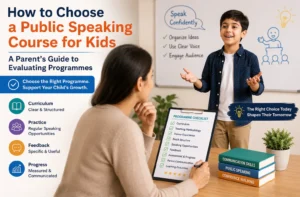
When comparing public speaking classes for kids in Dubai, parents should look beyond promises of confidence and focus on how the programme is delivered. Consider whether it provides:
- Practical speaking time: Children should have regular opportunities to speak, not just listen.
- Age-appropriate activities: Sessions should match children’s communication and confidence levels.
- Constructive feedback: Children should receive supportive guidance that helps them improve.
- Creative learning: Storytelling, drama, and interactive activities can make speaking practice more engaging.
- Convenient delivery: School-based programmes can provide children with a familiar environment for regular practice.
Build Confident Communicators with Speak & Spark
Active Kids offers Speak & Spark — Communication & Confidence Programme through Active Risers, its KHDA-approved ECA division. Designed for children aged 9+, the school-based programme combines Speech & Drama, public speaking, and confidence-building activities.
Delivered onsite in partner schools across Dubai, Speak & Spark gives children a structured environment to practise communication and creative expression.
If you are exploring public speaking classes kids in Dubai parents can access through their child’s school, explore the Active Kids school programmes to learn more about Speak & Spark.
FAQs: 5 Benefits of Public Speaking Classes for Kids in Dubai
What age is suitable for kids to start public speaking classes?
Children can begin developing foundational communication skills around age 7 to 9. At this stage, programmes focus primarily on storytelling, vocal expression, and building comfort in front of small peer groups rather than formal speechwriting.
Will public speaking classes help a shy child?
Yes. Structured classes use gradual exposure and supportive group exercises to help quiet or hesitant children build confidence at their own pace. Instructors focus on small, encouraging steps rather than pushing children into uncomfortable situations.
How do public speaking skills help with school presentations?
Speaking classes teach children how to organize their thoughts logically, control their breath and pace, and use body language effectively. These practical techniques make classroom presentations feel manageable and allow students to present their knowledge clearly.
What is the difference between public speaking and drama classes?
While drama focuses on acting, character portrayal, and theatrical performance, public speaking places greater emphasis on expressing personal ideas, structuring arguments, and presenting information clearly. Hybrid programmes like Speak & Spark combine elements of both to build engagement and creative confidence.