
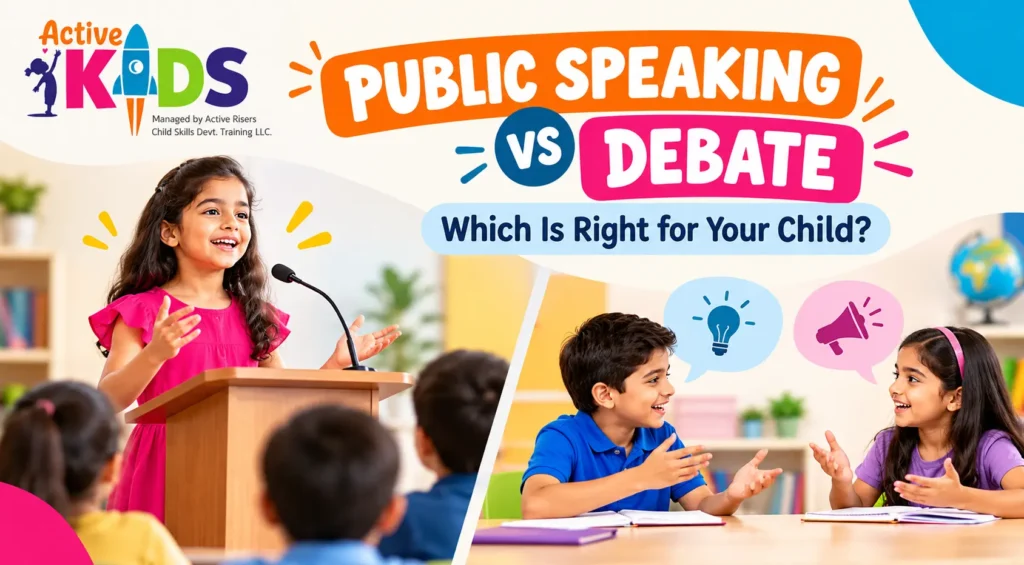
Some kids have lots of opinions but find it hard to share them with others. Some kids know what they believe and want to share why. Both types of kids need a chance to develop their communication skills, but they may need to start somewhere different. When it comes to public speaking vs debate classes for kids, the right choice depends on what a child needs to practice and achieve. Public speaking classes can help a child learn to clearly deliver a message to an audience. While debate classes can teach how to formulate and defend a position. The two areas have some skills in common, but understanding the differences can help parents choose the best option for their child.
Public Speaking Classes: What Kids Can Learn
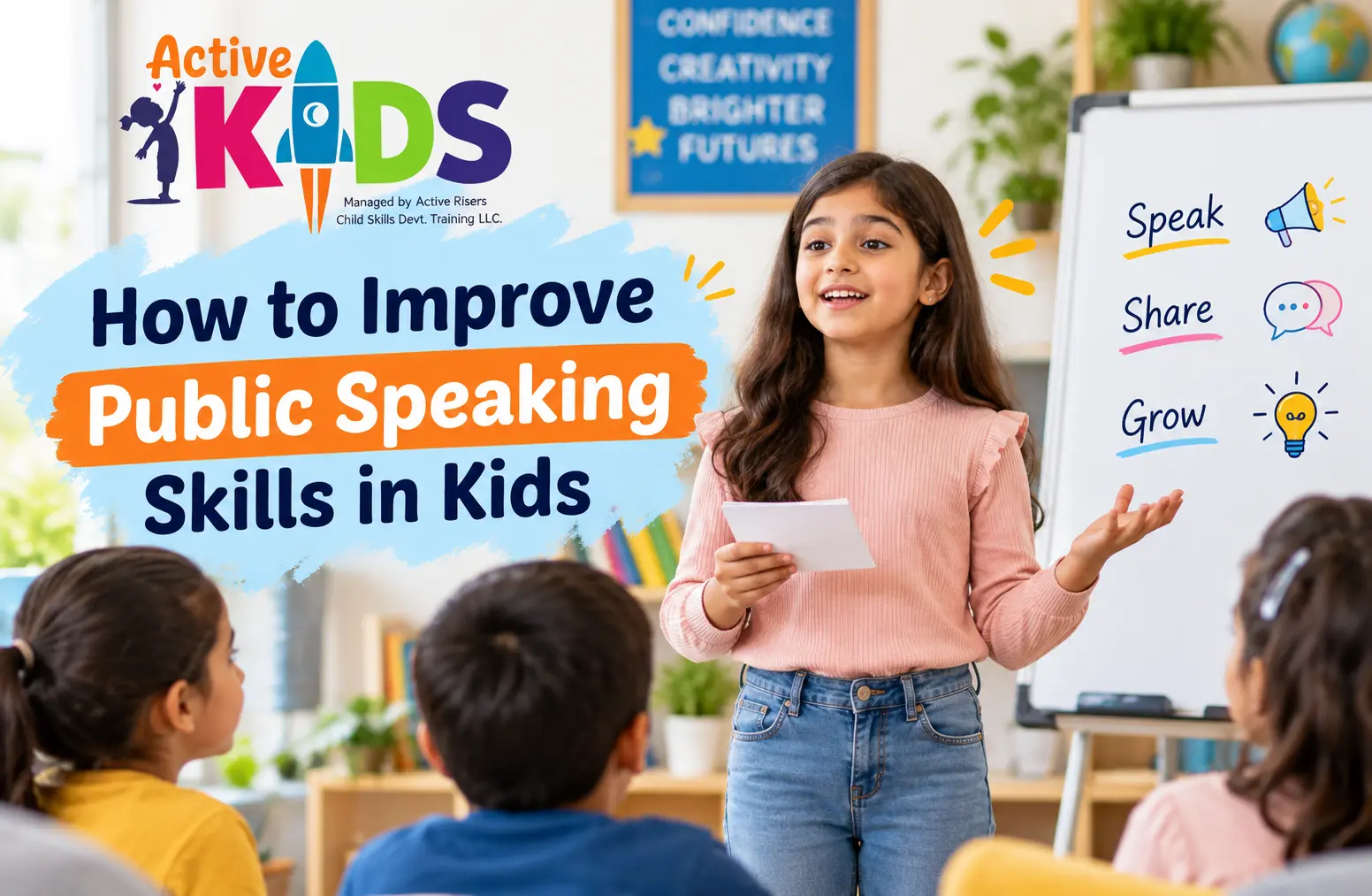
Public speaking is about delivering information to an audience in a way that the audience can understand and relate to.
Lessons often involve sharing a story, introducing a topic, sharing an experience, or even giving directions. Kids learn how to start, stop, and structure their message for best results. They also learn how to use eye contact, posture, facial expressions, and projection to communicate effectively. These skills help kids become confident presenters without putting pressure on them to act or feel a certain way
If a child feels nervous sharing in front of their peers, smaller speaking activities can help them get started. With practice and guidance, kids can learn to share their ideas confidently in class or in a larger setting.
Debate Classes: What Kids Can Learn
Debate requires kids to think about a topic more deeply and to explain why they believe what they believe.
While public speaking classes involve sharing information, debate classes are more about exploring ideas and supporting a position. In a debate, kids might explore whether schools should require uniforms or whether reading periods should be included in every class. They learn to support their ideas with reasons and examples, identify a counterclaim, and respond respectfully to another person’s arguments. By thinking through these topics and practicing these skills, kids can become better critical thinkers and communicators.
Debate is about much more than simply arguing with someone. It involves researching and organizing facts, listening actively to another person’s ideas, and responding thoughtfully. Kids should be encouraged to ask why things are the way they are and to learn how to share their ideas confidently.
Public speaking vs debate classes for kids: the key differences
| Area | Public speaking | Debate |
| Main goal | Deliver a clear, engaging message | Explain and defend a viewpoint with reasons |
| Typical activities | Stories, presentations, speeches | Arguments, rebuttals, structured discussions |
| Skills practised | Voice, pacing, structure, body language | Reasoning, evidence, listening, response |
| Confidence focus | Becoming comfortable addressing an audience | Expressing and defending ideas under discussion |
| Possible starting point | Children who need practice organising and delivering a message | Children ready to compare viewpoints and respond to others |
Neither format is automatically more advanced for every child. A confident speaker may still need help building a logical argument, while a child with strong ideas may need more practice speaking clearly to an audience.
When To Choose Public Speaking Classes for Kids
Public speaking may be a good option for your child if he would benefit from starting with more basic speaking skills. Public speaking classes can help kids who feel uncomfortable presenting to their peers, speak softly in groups, get tongue-tied easily, or who need to practice organizing their ideas for a presentation. It may also be a good option for kids who enjoy show-and-tell or who like to share their ideas or opinions with others. Children can also practise these skills at home through simple, enjoyable exercises. Try these fun speaking activities for kids to build confidence to help your child become more comfortable expressing ideas and speaking in front of others.
Children may choose to take public speaking classes for many reasons. Some kids enjoy sharing their opinions, while others need additional practice speaking in front of an audience. Age can be a factor in choosing debate or public speaking, but it shouldn’t be the deciding factor. Readiness and interest matter more than age, as kids of all ages can enjoy these types of classes. A 9-year-old can enjoy simple debates, while a 12-year-old can benefit from additional public speaking practice.
When To Choose Debate Classes for Kids
Debate may be a good option for your child if he enjoys exploring ideas and asking “why.” Kids who enjoy asking questions and thinking through topics can learn to plan, explain, and defend their positions in debate classes. A child does not need to be a confident public speaker to participate in debate, but he should be comfortable discussing topics with others. He should also be able to respond to questions and share his ideas.
A child may enjoy debate classes more than public speaking classes if he needs help with reasoning, listening, and responding. A child who asks questions about why things happen the way they do may want to choose debate classes. The best debate classes provide guidance and structure while supporting kids in building their skills.
Can a Child Benefit From Both Types of Classes?
Kids can absolutely benefit from both public speaking and debate classes. The two activities provide different benefits. While public speaking classes can help a child learn to organize and deliver a message, debate classes can help him think through topics and support his ideas with evidence.
Some kids may benefit from working on public speaking skills before participating in debate. They may need to learn how to present information clearly before they can do more advanced activities, such as including evidence and rebuttals. Other kids may enjoy both activities and be able to participate in them at the same time. This depends on the individual child’s needs and abilities. If you are comparing programmes for your child, explore our guide to the best public speaking and debate courses for kids in the UAE to understand what to look for when choosing the right learning option.
How To Choose the Best Communication Class for Your Child
Consider asking these questions when choosing between public speaking and debate classes
- What will my child learn how to do?
- Does the class offer activities that are appropriate for my child’s age and skill level?
- Will my child receive helpful feedback from the teacher?
- Are there opportunities to practice and improve?
- How will my child’s progress be discussed?
Look for a class that helps your child develop his skills. Kids should be encouraged to practice speaking and listening skills, but they can’t expect to become confident orators right away. Every child learns at his own pace, so it’s important to recognize progress and celebrate improvements. Ask about feedback and opportunities to practice, rather than seeking a class that promises a confident child by the end of the course
Help Your Child Choose the Right Communication Class
When considering public speaking vs debate classes for kids, think about what your child needs to practice most. Public speaking can help your child learn to deliver messages clearly to an audience, while debate can help him think through topics and support his positions. By choosing the best class for his needs or by taking advantage of the opportunities at Active Kids Online, your child can gain confidence in his communication skills.
The Speak & Shine program at Active Kids Online encourages kids to learn and practice their speaking and listening skills. Learn more about the program and how it can help your child develop confidence in his communication abilities.
FAQs: Public Speaking vs Debate Classes for Kids: Which Is Right for Your Child?
What is the best age to learn public speaking?
Children can begin practising simple speaking skills when they are ready to share short ideas, stories or experiences. The right starting point depends on their development, interest and the support provided, rather than one fixed age.
Is speech or debate better for children?
Public speaking is useful for practising message structure, voice, delivery and audience confidence. Debate adds structured reasoning, evidence and responses to different viewpoints. The better choice depends on the skills the child needs next.
How can I teach kids to debate effectively?
Start with an age-appropriate question, ask the child to give one clear reason, invite them to listen to a different view and practise responding respectfully. Keep the focus on explaining ideas, not winning an argument.
What is a public speaking course for kids?
It is a guided programme where children practise speaking to an audience through activities such as storytelling, short speeches and presentations, with feedback on clarity, structure, voice and delivery.
Are public speaking classes worth it for children?
They may be useful when children receive regular opportunities to practise, clear feedback and activities suited to their level. Parents should review the curriculum and teaching approach rather than relying on broad promises.
What are good speech topics for kids?
Good topics are familiar, age-appropriate and easy for a child to explain, such as a favourite book, a hobby, a helpful invention, an animal they admire or a school rule they would change. The topic should invite the child to organise their own ideas.