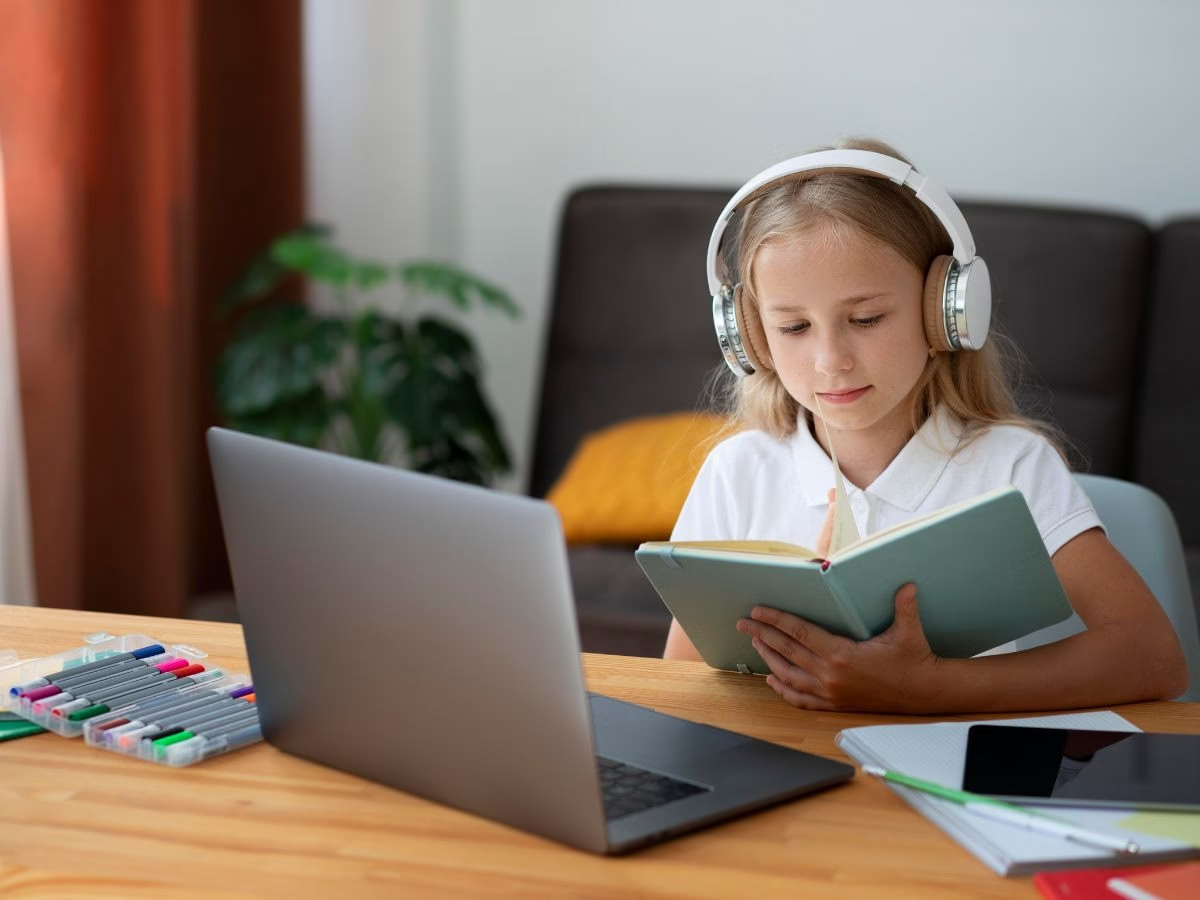

A child does not become confident simply by spending more time in front of a screen. Confidence grows when a child gets repeated chances to speak, make decisions, try something difficult, receive useful feedback and notice their own improvement. That is why the quality of an online programme matters far more than the fact that it happens online.
For parents, the best online classes for kids are the ones that make children active participants rather than passive viewers.
For parents comparing online classes for kids, the better question is not “Are online classes good?” It is “What is my child actually doing during the class?” A live session where children answer questions, present ideas, practise communication and interact with a teacher can create a very different experience from a recorded lesson that a child watches alone.
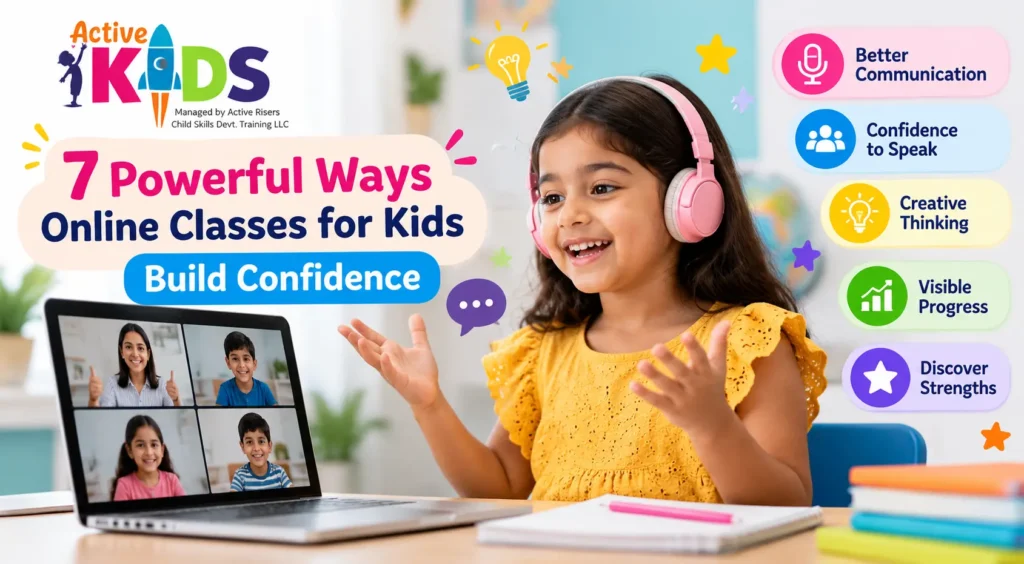
For children aged 4–14, well-designed learning can combine academic support with communication, creativity, confidence and practical skill development. Here are seven ways a strong programme can contribute.
1. Live participation gives children more chances to speak
Confidence is built through participation, not observation. In a live class, a child may answer a question, explain an idea, read aloud, perform a short role-play, share a story or respond to another learner. These small moments matter because they make speaking feel normal rather than exceptional.
A child who rarely volunteers in school may be more willing to speak in a smaller online group, particularly when the teacher creates predictable routines. A simple pattern—greeting, warm-up question, short activity, practice and feedback—can make participation less intimidating.
The goal is not to force a quiet child to perform. It is to create enough safe speaking opportunities that the child gradually develops a sense of “I can do this.”
2. Small-group learning can reduce the fear of getting it wrong
Some children stay quiet because they are worried about making a mistake in front of a large group. Smaller groups can give them more room to participate without feeling that every answer is being judged by a whole classroom.
This is particularly useful for communication skills. Children can practise asking questions, listening carefully, taking turns, explaining their reasoning and responding politely when they disagree. These behaviours are easier to develop when a teacher has time to notice individual participation.
Good online learning should still have structure. Children need clear expectations, manageable activities and feedback that tells them what they did well and what to try next.
3. Regular speaking practice strengthens communication skills
Communication improves when children use it regularly. A single presentation at the end of a school term gives a child very little practice compared with short, repeated speaking activities throughout the year.
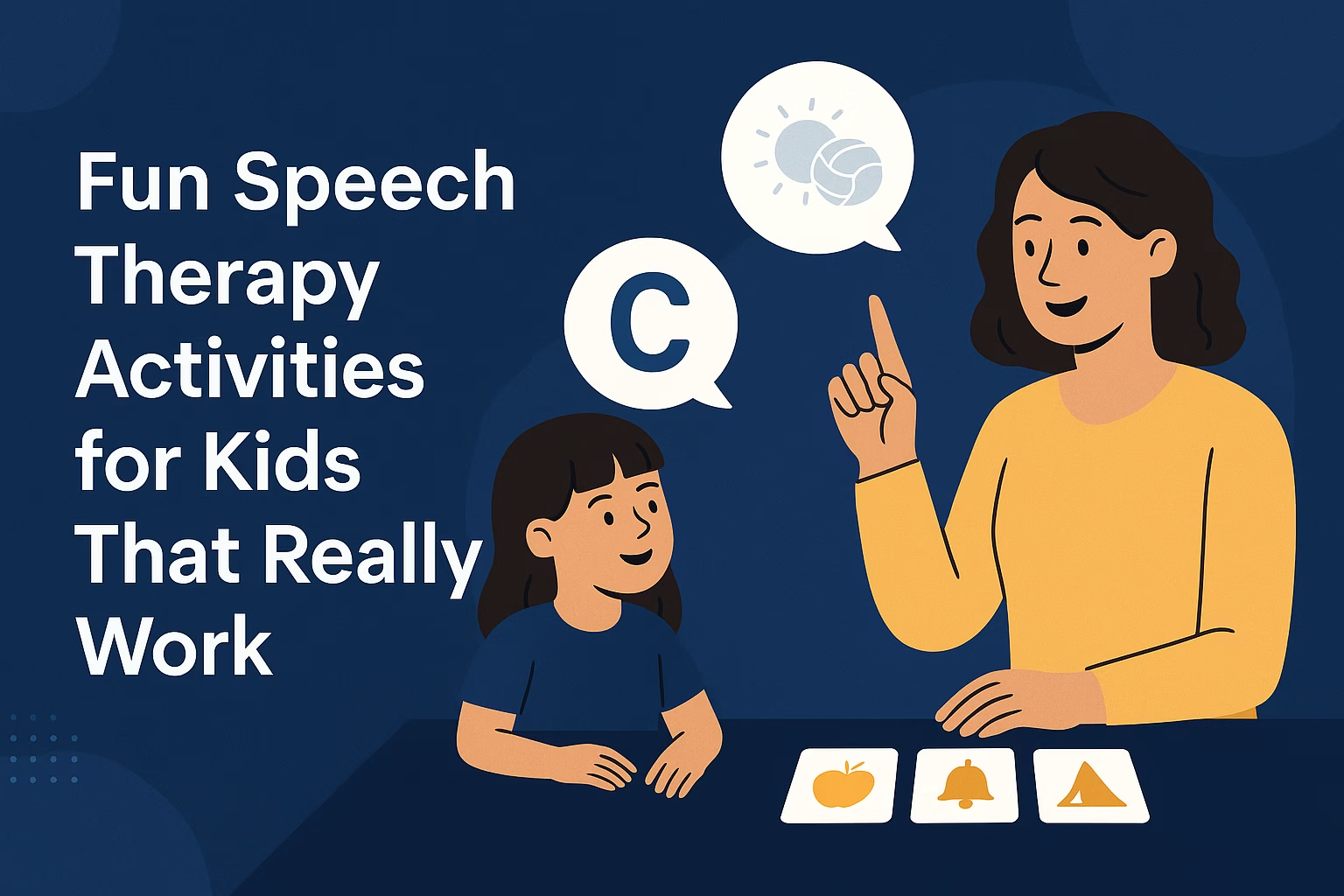
Live online classes for kids can include storytelling, show-and-tell, discussion, debate, role-play, reading aloud and short presentations. Each activity develops a slightly different part of communication: organising thoughts, choosing words, listening to others, using voice effectively and adapting a message for an audience.
The benefit is cumulative. A child who repeatedly explains an idea to a teacher and peers begins to understand how to start, develop and finish an answer instead of relying on one-word responses.
4. Feedback turns effort into visible progress
Praise can encourage a child, but specific feedback teaches a child. “Good job” feels positive; “Your explanation was clear because you gave an example, and next time try slowing down at the end” gives the child something they can actually use.
Teacher feedback is especially valuable when it is timely and focused on a small number of behaviours. For speaking, that might mean volume, pace, eye contact, sentence structure or organisation. For writing, it might mean vocabulary, sequencing or clarity.
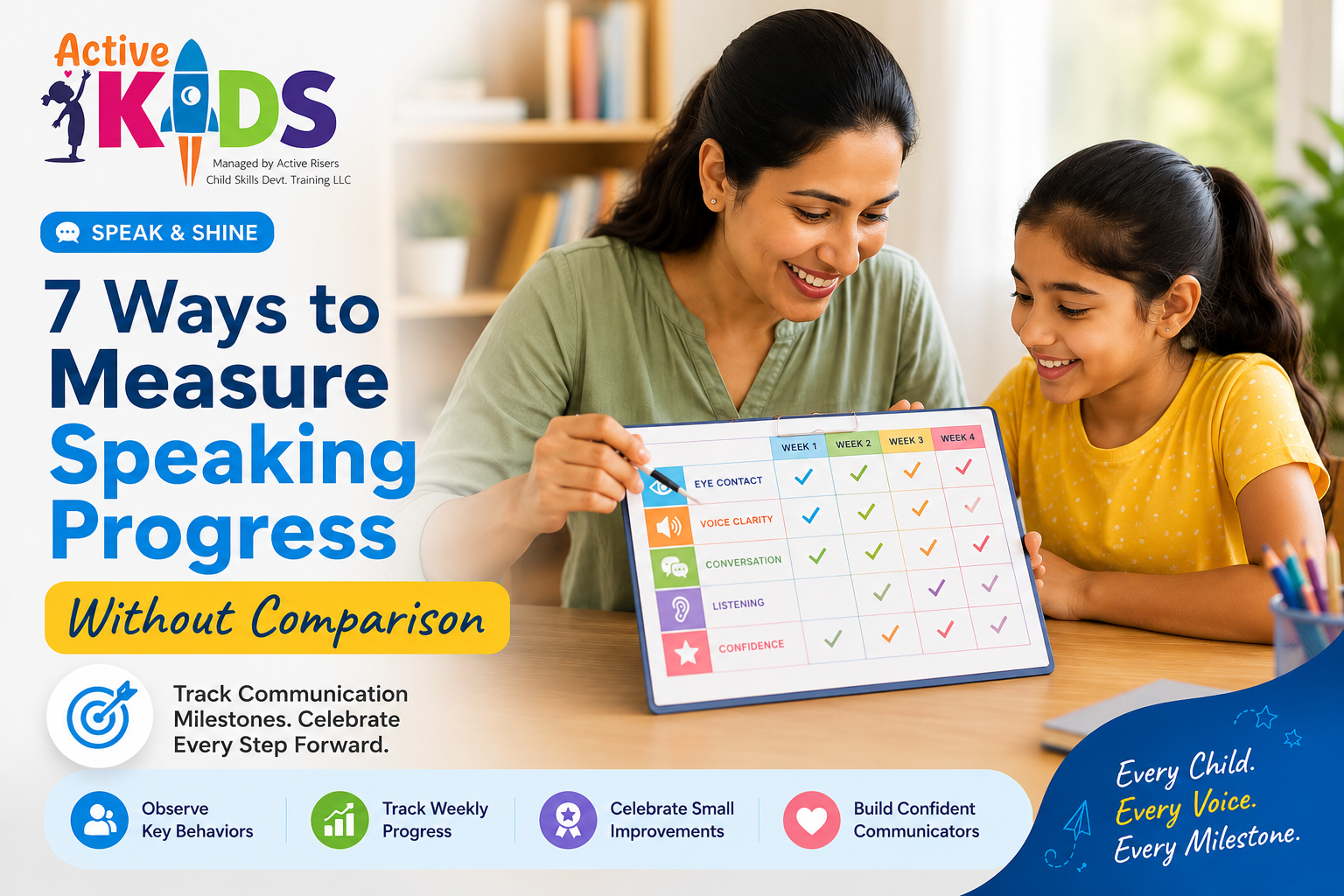
Parents should look for programmes that have a clear way of observing learning progress. Progress does not always mean a test score. It can also mean that a child volunteers more often, gives longer answers, speaks more clearly or handles a presentation with less support.
OECD research notes that digital tools can support engagement, but their effectiveness depends on how they are designed and used. This makes teaching quality and meaningful participation more important than technology alone.
5. Skill-based activities help children discover what they are good at
Confidence often grows when children find an activity that suits them. One child may enjoy storytelling. Another may prefer debate. Another may become more comfortable through phonics, creative writing, drama or structured conversation.
This is one reason parents should not judge an online programme only by the subject name. Look at the learning method. Is the child speaking? Creating? Performing? Solving? Explaining? Working with peers? Receiving feedback?
Online extracurricular classes for kids can be particularly useful when they complement school rather than trying to reproduce school at home. A well-chosen programme can give a child a different context in which to practise skills that also matter in the classroom.
UNICEF’s digital-education strategy emphasises that technology should enhance learning and human connection rather than replace essential social interaction, play and other non-digital activities.
6. Flexible learning can make consistent practice easier
One practical advantage of virtual classes for kids is flexibility. Families can often choose a schedule that fits around school, homework, activities and family commitments. That matters because confidence-building depends on consistency.
A child does not need an intense schedule to improve. A regular weekly session, combined with a short activity at home, can create a useful rhythm. Parents can ask the child to retell a story, explain a new word, give a two-minute opinion or practise a short presentation.
UNICEF guidance for families learning from home has recommended routines, age-appropriate sessions and a balance between online and offline activities.
The important distinction is between purposeful screen time and passive screen time. A live lesson that asks a child to speak, listen, create and respond is fundamentally different from watching videos without interaction.
7. Progress can carry into school, friendships and everyday life
The most useful confidence is transferable. A child should not become confident only inside a class. The aim is for the skill to appear elsewhere: answering a teacher’s question, introducing themselves to a new classmate, explaining a project, participating in a group task or sharing an opinion at home.
This is why effective online learning for children should include authentic communication rather than isolated drills. Children need opportunities to use skills in situations that resemble real life.
A speaking activity might lead to better classroom participation. A debate task can strengthen reasoning and listening. Creative writing can help a child organise thoughts before speaking. Drama can encourage expression and awareness of voice and body language.
The strongest outcome is not simply that a child “speaks more.” It is that the child becomes more willing to communicate, more prepared to try and more capable of expressing an idea clearly.
What Parents Should Look for Before Choosing a Programme
- Is the class live and teacher-led, or mainly recorded content?
- How much of each session involves active participation?
- Are children working individually, in pairs or in small groups?
- Does the teacher provide specific feedback?
- Is the curriculum appropriate for the child’s age and current ability?
- How is learning progress observed or communicated to parents?
- Does the programme develop practical skills such as speaking, listening, creativity or critical thinking?
- How does the provider handle online safety, privacy and age-appropriate digital use?
- Can the schedule realistically fit the family’s routine?
How to Make Online Learning Work at Home
- Create a consistent learning space with minimal distractions.
- Keep the device and connection ready before the session starts.
- Ask the child what they learned instead of asking only whether they enjoyed the class.
- Encourage short offline practice after speaking or writing activities.
- Celebrate specific improvements, such as clearer answers or greater participation.
- Avoid comparing one child’s speaking style or progress with another child’s.
- Keep recreational screen time separate from structured learning time.
Why Live, Interactive Classes Matter
The strongest case for online learning is not convenience alone. It is the possibility of combining flexibility with meaningful interaction.
OECD research describes engagement as critical to meaningful learning and examines how digital learning environments can be designed to support engagement. UNICEF similarly stresses evidence-based, accessible digital learning and keeping teachers and learners at the centre.
That gives parents a useful standard: do not ask only whether a programme is online. Ask whether it is interactive, purposeful, age-appropriate and led by people who understand how children learn.
How Active Kids Online Fits This Approach
Active Kids Online provides live online programmes for children with a focus on communication, confidence, public speaking, speech and drama, debate, English language skills, phonics, creative writing and related skill development. The programme range is designed for children in the 4–14 age group, with structured learning and practical participation.
Parents can explore the School Programmes if they are looking for an education-enrichment model that connects communication and confidence development with the school environment.
For individual learning, the Public Speaking Classes for Kids page provides a focused route for children who need structured speaking practice.
Parents can also read about how to measure speaking progress without comparison to understand what meaningful progress can look like beyond grades or competition.
Final Takeaway
The value of online learning depends on what happens during the lesson. If a child is only watching a screen, the opportunity is limited. If the child is speaking, listening, creating, practising, receiving feedback and gradually taking on more responsibility, the experience can become a useful part of skill development.
For parents comparing online classes for kids, look beyond the timetable and subject label. Choose a programme where your child is actively involved, where the teacher can see individual progress and where confidence is built through repeated, age-appropriate practice.
The right class should not simply keep a child busy after school. It should help the child become more comfortable expressing ideas, communicating with others and taking on new challenges.
FAQs: 7 Powerful Ways Online Classes for Kids Build Confidence
How do online classes for kids build confidence?
Online classes for kids can build confidence by giving children regular opportunities to speak, answer questions, share ideas, participate in activities and receive specific feedback. Repeated practice can make communication feel more natural and help children become more willing to participate.
Are online classes good for children’s communication skills?
Yes, well-designed online classes can support communication skills when children actively participate. Activities such as storytelling, show-and-tell, discussions, role-play, reading aloud and short presentations give children repeated opportunities to practise speaking, listening and expressing ideas.
Are live online classes better than recorded classes for kids?
For confidence and communication development, live online classes can provide advantages because children can interact with a teacher and other learners in real time. They can answer questions, practise skills, receive feedback and participate in structured activities instead of only watching recorded content.
What should parents look for in online classes for kids?
Parents should consider whether the class is live and teacher-led, how much children participate, whether small-group activities are used, whether teachers provide specific feedback, whether the curriculum is age-appropriate and how learning progress is communicated to parents.
Can online classes help shy children become more confident?
They can provide a useful environment for shy children when the class offers manageable speaking opportunities and supportive teacher guidance. Small-group learning can give children more room to ask questions, take turns, explain ideas and practise communication without feeling that every response is being judged by a large group.
What skills can children develop through online classes?
Depending on the programme, children can develop communication, speaking, listening, creativity, critical thinking, writing and presentation skills. Activities such as public speaking, debate, creative writing, phonics, storytelling and drama can give children different ways to practise and discover their strengths.