
Introduction
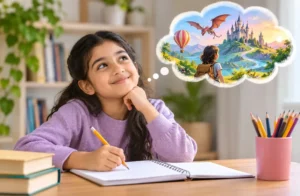
A blank page can make even an imaginative child say, “I don’t know what to write.” That is where creative writing prompts for kids can help. A good prompt gives a child a starting point, but leaves enough room for their own characters, choices and surprises.
The ideas below are grouped by age and writing level, from drawing and storytelling for younger children to more developed plots, point of view and persuasive writing for teenagers. Use them as flexible starting points rather than strict school assignments. A child can write a sentence, tell the story aloud, draw a scene or build a longer piece, depending on their confidence and ability.
Why creative writing is valuable for children
Creative writing gives children a way to turn thoughts, observations and imagination into stories and explanations. As they practise, they make choices about words, sequence, characters and meaning. Writing can also help children communicate an idea clearly and consider how another person might see a situation.
Writing does not need to begin with a full page of neat sentences. Younger children may draw a picture and explain it to an adult. Older children may plan a plot, experiment with dialogue or write from a different character’s perspective. The important thing is to make the task appropriate to the child’s current stage.
How to choose a prompt for your child’s age and level
Age bands are useful guides, not fixed rules. Children develop at different rates, and a prompt that excites one child may frustrate another. Choose an idea that feels interesting and manageable, then adjust how much writing you expect.
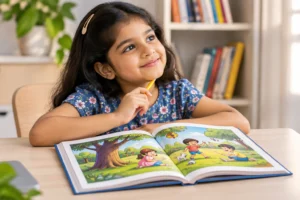
For younger children: invite them to draw, describe and dictate a sentence. Ask simple questions such as who, where and what happened next.
For primary-age children: encourage a beginning, a problem and an ending. Ask them to add details about what a character sees, hears or feels.
For older children: introduce a stronger conflict, a change in point of view, dialogue, evidence or a theme. Encourage them to revise one part after completing the first draft.
50 creative writing prompts for kids, grouped by age
Choose one prompt at a time. Give your child a little thinking space before writing, and let them change the idea if a different direction feels more interesting. These creative writing prompts for kids are starting points, so encourage your child to take the idea in a completely different direction.
Ages 4–6: Drawing, talking and first sentences
- Draw a friendly monster. What is its name, and what does it like to eat?
- If your favourite toy could talk, what would it tell you?
- Imagine a tiny door at the bottom of your garden. Who lives behind it?
- Write or tell a story about a day when it rained colourful bubbles.
- What would you do if a butterfly followed you all the way to school?
- Invent a new animal. What does it look like, and where does it live?
- Your teddy bear wants to plan a birthday party. Who will it invite?
- Imagine your shoes could take you anywhere. Where would they go?
- What is the kindest thing a superhero could do for someone?
- Describe your favourite place using colours, sounds and smells.
- One morning, your breakfast starts singing. What happens next?
- Create a story about a little cloud that gets lost and finds its way home.
Ages 7–9: Building characters and short stories
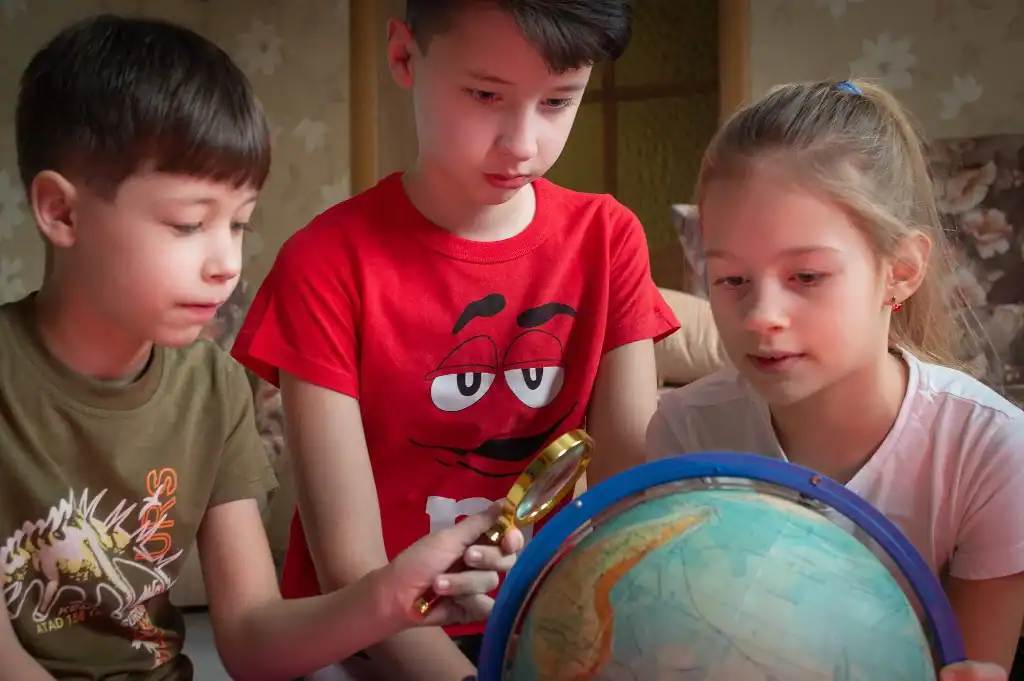
- You find a map inside a library book. Where does it lead, and what do you discover?
- A new student arrives at school with a very unusual secret. What is it?
- Your pet disappears for an afternoon and returns with a tiny crown. Tell the story.
- Write about a day when you can understand what birds are saying.
- A mysterious parcel arrives with your name on it. What is inside?
- Invent a new festival for your neighbourhood. What do people eat, make and celebrate?
- You wake up and discover that your room has become a jungle. How will you get out?
- Write a story about two friends who disagree but must solve a problem together.
- A robot joins your family for one day. What does it misunderstand?
- Imagine you can visit any place in the world for one afternoon. Describe your adventure.
- Write a new ending for a familiar fairy tale. What would you change?
- A small seed grows into a tree overnight. What makes this tree special?
- Create a character who is afraid of something surprising. How do they face that fear?
Ages 10–12: Plot, description and point of view
- A school trip takes an unexpected turn when the group discovers an abandoned observatory.
- Write a story in which the main character receives a message from their future self.
- A town has no clocks. How do people organise their lives, and what happens when time becomes important?
- Tell a familiar event from the point of view of an animal that witnessed it.
- Two rivals must work together to protect something important. What brings them together?
- Describe a city where every building reflects the personality of the person who lives inside.
- Your character finds a notebook that records tomorrow’s events. What do they do with it?
- Write about a friendship tested by a misunderstanding. Show how the characters resolve it.
- Imagine that one ordinary object in your home has a hidden power. What is it, and what are its limits?
- Write a mystery that begins with a missing photograph and ends with an unexpected explanation.
- A new rule is introduced at school, and students have very different opinions about it. Present both sides before giving your view.
- Describe a storm from the perspective of someone waiting safely indoors for important news.
- Write a short adventure in which the hero succeeds through patience and observation rather than strength.
Ages 13–14: Voice, themes and more complex storytelling
- Write about a character who must choose between being accepted by a group and doing what they believe is right.
- Imagine a future where people can store their memories in digital files. What could go wrong?
- Tell a story in which the reader’s understanding of the main character changes in the final paragraph.
- Write a persuasive letter to your school proposing one realistic improvement. Support your idea with reasons.
- A community receives a warning that its familiar way of life will change within a year. How do people respond?
- Create two characters who remember the same event differently. Show how their accounts reveal different truths.
- Write a story that begins at the end and gradually reveals how the characters reached that moment.
- Explore the idea of courage through a character who takes a small but difficult action.
- Imagine a world where every promise becomes a visible mark. What would society be like?
- Write a dialogue between a person who wants to preserve a tradition and another who wants change.
- Describe a place that has changed over time. Use details to show what has been lost and what has improved.
- Write a short story about a decision that seems easy at first but becomes more complicated with every new detail.
A simple way to turn a prompt into a complete story
Once your child has chosen a prompt, use these five questions to help shape the idea:
- Who is the story about? Give the main character a name, a goal and one distinctive quality.
- Where and when does it happen? Help the reader picture the setting.
- What does the character want? A clear goal gives the story direction.
- What gets in the way? Add a problem, surprise or difficult choice.
- How does the character respond? The ending should show what changed, what was learned or what happens next.
These questions are a support, not a formula. A poem, diary entry, comic or letter may need a different structure.
How parents can make writing feel enjoyable
Keep the first session short enough for your child to finish with a sense of achievement. For a younger writer, a few spoken sentences and a drawing may be plenty. An older child might spend longer planning and drafting. Avoid turning every prompt into a spelling or grammar test.
Try these practical habits:
- Let your child choose from two or three prompts rather than assigning one every time.
- Keep a notebook, paper, pencils and colouring materials within easy reach.
- Talk through an idea before writing. Saying a story aloud can help children organise their thoughts.
- Ask questions about the story instead of correcting every line while the child is drafting.
- Celebrate an original detail, an interesting character or a clear ending.
- Invite your child to read a finished piece aloud or share it with someone they trust, if they want to.
Children may also enjoy writing menus, invitations, comic strips, postcards, letters and short reviews. These everyday formats show that writing has purposes beyond completing a worksheet.
When a child gets stuck
If your child cannot think of what to write, do not rush to supply the whole story. Ask one small question: “Who is there?”, “What is the first thing that happens?” or “What would make this more surprising?” You can also offer a choice between two settings or characters.
If handwriting, spelling or organising ideas makes writing unusually difficult, reduce the amount of text expected and focus on the idea first. A child can dictate a story, use speech-to-text with adult support where appropriate, or create a picture sequence before writing. If difficulties persist and affect schoolwork, discuss them with the child’s teacher or a qualified specialist.
Help your child find their own writing voice
Prompts are most useful when they open a door rather than dictate what a child must create. These creative writing prompts for kids give children a starting point to explore their imagination, develop original ideas and express themselves through stories. Start with an idea that matches your child’s interests and current writing level. Give them time to think, let them make unexpected choices and encourage them to finish in their own way.
If your child would benefit from guided practice in planning ideas, developing stories and expressing them clearly, explore the Active Kids Online Creative Writing programme. It offers a structured learning option for children who want to develop their writing skills with support.
Frequently Asked Questions About Creative Writing Prompts for Kids
What are some good creative writing prompts for kids?
Good creative writing encourages children to imagine characters, explore new places and create their own stories. Examples include imagining a talking animal, discovering a secret door, finding a mysterious letter or inventing a new world. Choose prompts that match your child’s age, interests and writing confidence.
What are some good creative writing topics for kids?
Popular creative writing topics for kids include adventure stories, friendship, magical creatures, school experiences, mysteries, future worlds, talking animals, superheroes, family memories, and imaginary journeys. These topics give children opportunities to develop characters, describe settings and create interesting storylines.
What are some creative writing ideas for a 12-year-old?
Children around 12 years old can explore more developed story ideas, including mystery-solving, time travel, unexpected friendships, future technology and stories told from an animal’s perspective. Encourage them to build a clear plot, introduce a challenge and create a meaningful ending.
What are some fun writing prompts for teenagers?
Teenagers can explore prompts involving difficult decisions, friendship, identity, future societies, moral dilemmas and unexpected discoveries. Encourage them to experiment with dialogue, different points of view, persuasive writing and more complex story structures.
Can younger children use creative writing prompts if they cannot write independently?
Yes. Younger children can participate through drawing, storytelling, describing pictures or dictating sentences to an adult. Parents can ask simple questions about characters, settings and events to help children develop their ideas before writing independently.
Should I correct grammar and spelling while my child writes?
During the first draft, focus on ideas, imagination and confidence rather than correcting every mistake. Once your child finishes writing, review one or two grammar or spelling points together. This helps make writing practice more enjoyable and manageable.
How often should children practise creative writing?
Short, regular writing sessions can help children develop a consistent writing habit. Start with a few minutes at a time and choose a frequency that suits your child’s interests and daily routine. Allow children to explore different prompts rather than making every session feel like homework.
What if my child does not enjoy creative writing or fiction?
Start with topics that connect to your child’s interests. They can write comics, letters, diary entries, reviews, personal experiences or descriptions instead of fictional stories. Giving children a choice of writing formats can make the activity more engaging.