
Introduction
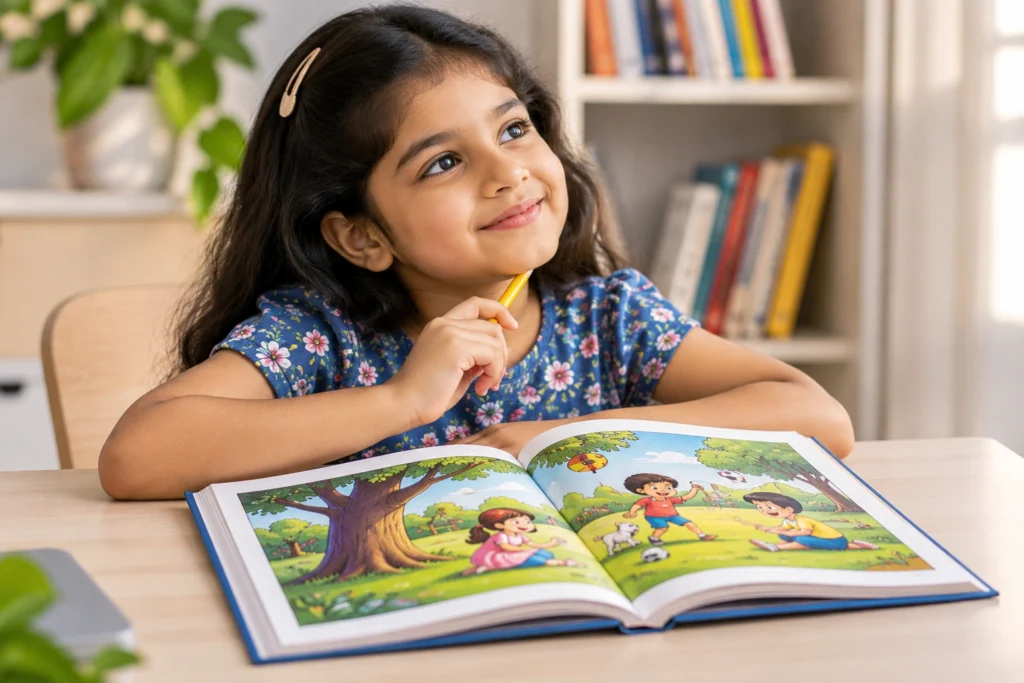
A child can read every word on a page and still be unsure what the story means. That is where picture reading comprehension can make a real difference. Pictures give children something concrete to notice, discuss and connect with the words they read.
A simple illustration can lead to useful questions: Who is in the scene? What might have happened before this moment? Which detail gives you that idea? These conversations help children move beyond sounding out words and begin thinking about meaning.
You do not need a special workbook or a long lesson to get started. A storybook, a printed picture or even an image in a magazine can become a short learning activity. Try the seven ideas below and adjust the questions to your child’s age and reading level.
Why pictures can support reading comprehension
Pictures provide context. A child who is unsure about a word or situation can use details in the image to make a sensible connection. This does not mean guessing instead of reading. It means using the illustration alongside the text, then checking whether the two make sense together.
Looking closely also encourages children to explain their thinking. When a child says, “I think the boy is late because he is running and the bus is moving away,” they are using visual evidence to support an idea. That is a useful habit for reading stories and understanding information texts.
A UAE Ministry of Education teacher guide includes picture walks, story retelling with props, interactive read-alouds and matching text to images among its suggested active-learning strategies for reading comprehension. These are practical approaches families can adapt at home.
1. Take a picture walk before reading
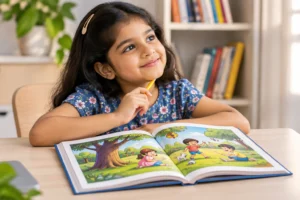
Choose a storybook with clear illustrations. Before reading the words, slowly look through two or three pages with your child. Ask them to describe what they notice, name the characters and point out anything that seems important.
Try questions such as: “Where do you think they are?” “What do you notice about the weather?” or “What might happen next?” Accept reasonable answers, even when they differ from your own prediction. The purpose is to get your child looking carefully and talking about the clues.
For younger children, naming objects and actions is enough. Older children can explain how one picture connects to the next.
2. Predict what might happen next
Pause at an interesting moment in the story and cover the next page. Ask your child to make a prediction using details from the picture and what has already happened in the text.
For example, if a character is holding an umbrella while dark clouds gather, your child might predict that it is about to rain. Follow up with: “Which part of the picture helped you decide?” This small question encourages reasoning rather than random guessing.
When you continue reading, return to the prediction. Was it correct? Did the story take a different turn? Explain that a prediction does not have to be right; it should be supported by clues.
3. Find the details that matter
Show your child a busy picture and give them a short observation challenge. Ask them to find three things that tell us where the scene takes place, what the characters are doing or how someone might be feeling.
Move from simple identification to explanation. Instead of asking only “What is the girl holding?”, try “How do you know she is getting ready for school?” Your child may point to a school bag, uniform or lunch box.
This activity builds attention to detail and helps children distinguish important information from background decoration. It is also a useful way to practise new vocabulary in context.
4. Put the story events in order
Use three or four illustrations from a familiar story. Mix up the order and ask your child to arrange them from first to last. Then invite them to explain what happened in each picture.
Encourage connecting words such as first, next, after that and finally. These words help children describe a sequence clearly and prepare them to summarise a passage in their own words.
If you do not have separate picture cards, use pages from a storybook or draw quick sketches together. Keep the sequence short at first, then add more events as your child becomes comfortable.
5. Read between the lines
Some information is suggested rather than stated directly. A character may be smiling, standing alone or looking at a broken toy. Ask your child what the character could be feeling and which visual clues support that idea.
For example: “The girl is looking at the empty plant pot. How do you think she feels? What makes you think so?” Your child might say she looks disappointed because the plant has fallen over.
This is an early form of making inferences. Remind children that more than one answer may be possible, but they should be able to point to a clue or detail that supports their thinking.
6. Match a sentence to the right picture
Prepare two or three simple sentences about a scene and show your child a small set of pictures. Ask them to match each sentence to the image that best represents it.
For example, use sentences such as “The dog is sleeping under the table” and “The dog is waiting beside the door.” Ask your child to explain which details helped them choose.
You can reverse the task too. Show one picture and ask your child to write or say a sentence that describes it accurately. This connects reading, vocabulary and sentence building.
7. Retell the story in your own words
After reading, put the book aside and ask your child to explain what happened. They can use the pictures as reminders, but encourage them to tell the story rather than simply list everything they can see.
Start with three prompts: “Who was the story about?”, “What happened?” and “How did it end?” Older children can add the problem, the character’s response and the lesson or message.
If your child misses an important event, turn back to the relevant page and ask a gentle question. Avoid interrupting every sentence to correct them. Let the retelling flow, then discuss one or two details together.
Choose activities that suit your child’s age
The same picture can support different levels of thinking. Keep the task manageable and increase the challenge when your child is ready.
Ages 4–6: Focus on naming objects, describing actions, identifying characters and making simple predictions. Use short picture books and ask one question at a time.
Ages 7–10: Add story sequencing, character feelings, cause and effect, and simple explanations based on visual clues. Encourage complete-sentence answers.
Ages 11–14: Use more detailed illustrations, comic strips, diagrams and images linked to non-fiction texts. Ask your child to compare evidence, infer a character’s motivation and explain how an image supports the written information.
A short picture-reading activity to try today
Find a picture showing a child in a park after rain. Spend one minute looking at it together, then ask these questions:
1. What details tell you it has been raining? 2. What might the child do next? 3. Which objects in the picture suggest where the scene takes place? 4. How might the child be feeling? 5. Give the picture a title and explain your choice.
Ask your child to point to the clue behind each answer. If they make a prediction, invite them to explain why it seems likely. There is no need to turn every answer into a test. A relaxed conversation is often enough to get useful thinking started.
How parents can make practice more effective
Keep sessions short. Ten to fifteen minutes of focused conversation is a sensible starting point for many children. Stop while the activity is still enjoyable rather than stretching it until your child loses interest.
Choose pictures that connect with your child’s interests: animals, sport, space, transport, nature or everyday family life. Familiar subjects make it easier to start a conversation, while new subjects introduce useful vocabulary.
Ask open questions and give your child time to answer. If they are stuck, offer a choice or point to one detail rather than immediately giving the answer. Praise the effort they put into noticing and explaining clues.
You can also combine these ideas with regular reading practice. Active Kids Online’s Phonics Club provides structured support for early reading and phonics development. Choose learning support that matches your child’s current needs and reading level.
When should you offer extra reading support?
If your child regularly struggles to explain what they have read, loses the meaning of a passage or finds age-appropriate reading unusually difficult, speak with their teacher. Ask which specific skills need attention, such as vocabulary, fluency, understanding instructions or recalling key details.
A single difficult book or an off day does not tell you much on its own. Look for patterns over time and work with the teacher on practical next steps. The aim is to make reading feel achievable while steadily building understanding.
Conclusion
Good reading is about more than saying the words correctly. Children also need to notice details, connect ideas, ask questions and explain what they understand.
Start with one picture and one thoughtful question. With regular, relaxed practice, picture reading comprehension can become a useful part of your child’s reading routine. The most important thing is to help them look closely, think for themselves and enjoy talking about what they read.
Frequently Asked Questions About Picture Reading Comprehension
What is picture reading comprehension?
It is the use of illustrations and visual details alongside written text to help a reader understand, interpret and discuss what is happening.
Are picture reading activities only for young children?
No. Younger children can identify objects and actions, while older children can analyse visual clues, infer meaning and connect images with more complex texts.
How often should children practise?
A short activity several times a week can be a useful routine. Adjust the frequency and length to your child’s attention, confidence and reading level.
Do pictures replace reading the words?
No. Pictures support understanding, but children should still read the text and check whether their ideas fit what the words say.
What if my child gives a different answer from mine?
Ask them to show which detail led to their answer. If their explanation is reasonable and supported by the picture or text, discuss it rather than treating every different interpretation as wrong.