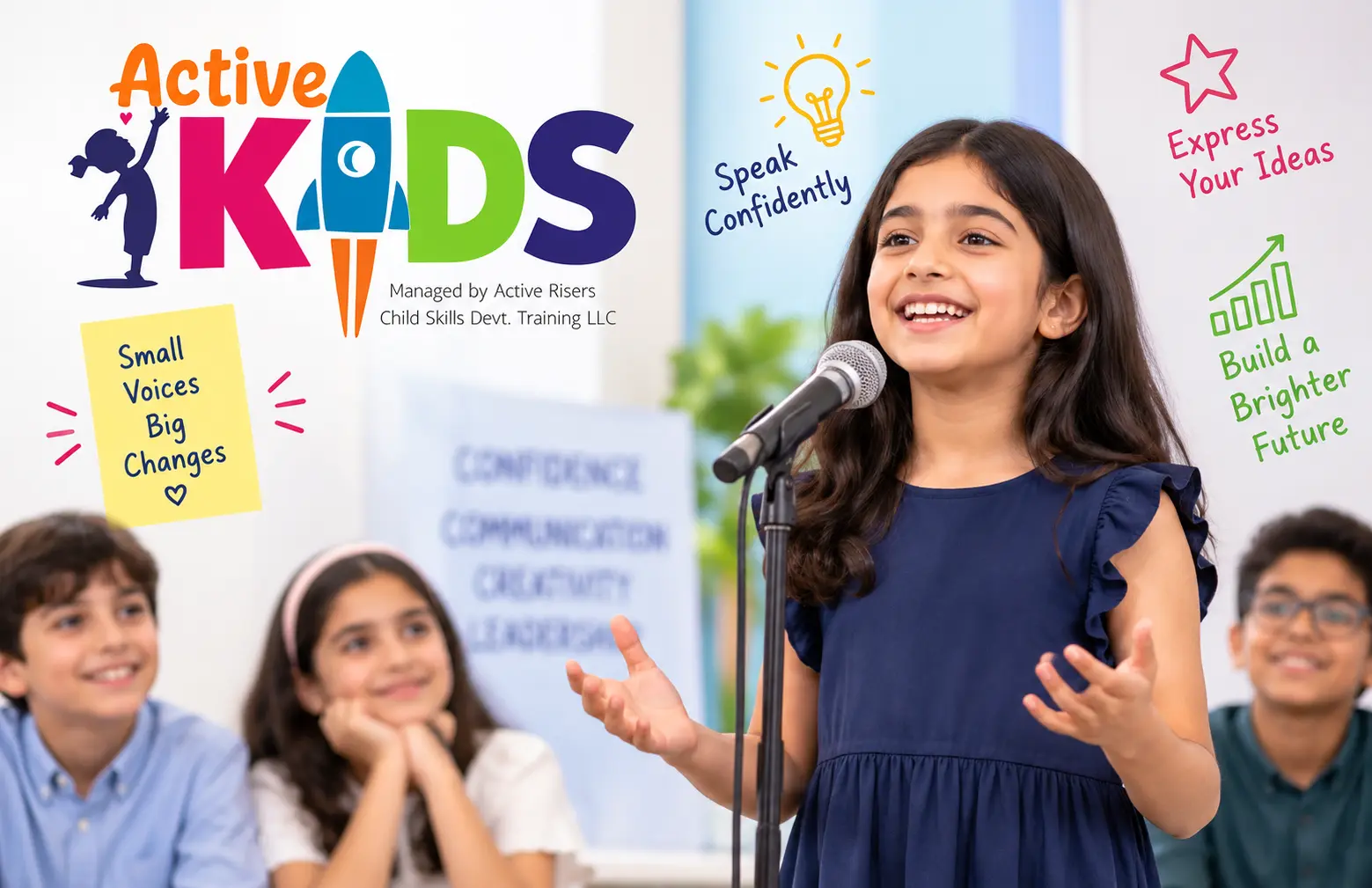

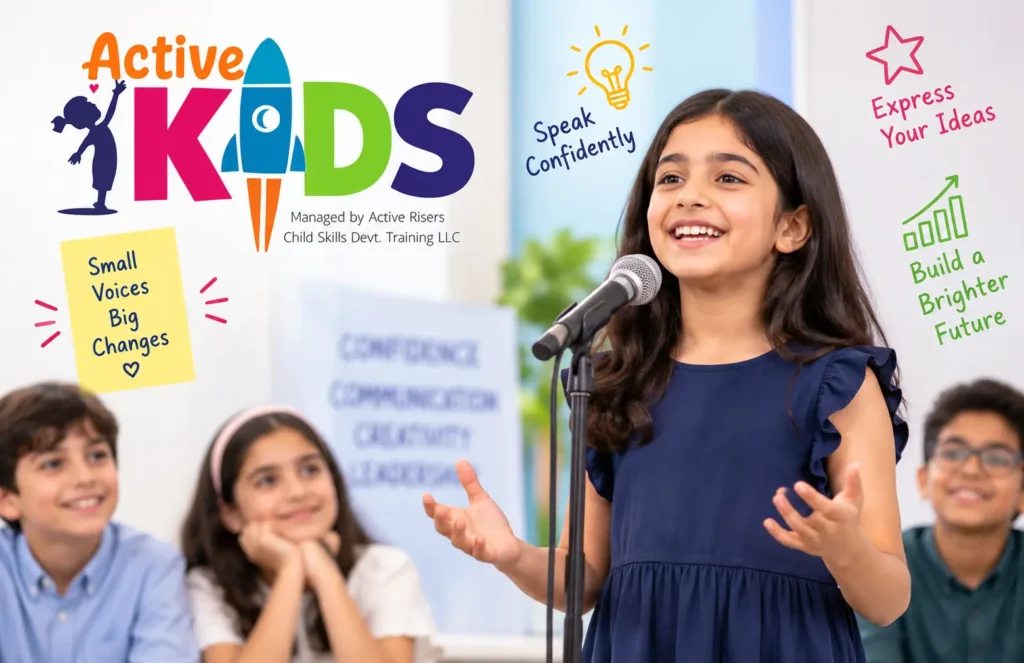
Many children have good ideas but struggle to express them.
They may know the answer in class but hesitate to raise their hand. They may understand a topic but become nervous during a presentation. Some simply speak too quickly when others are watching.
These challenges are common at this age.
A Public Speaking Course for Kids Aged 9–14 can give children regular opportunities to practise speaking in a structured and supportive setting. They can learn how to organise their thoughts, use their voice effectively, present ideas and communicate with greater confidence.
The benefits can extend beyond the classroom too.
Public speaking can support communication, confidence, critical thinking and leadership skills that children can continue using as they grow.
1. Builds Confidence Through Regular Speaking Practice
Confidence grows through experience.
A child who rarely speaks in front of others may naturally feel nervous when asked to give a presentation. Avoiding those situations can make them feel even more difficult.
Regular practice changes that experience.
Children can start with simple speaking activities. They can then gradually move towards longer speeches, presentations and group activities.
Each successful attempt gives them another opportunity to become comfortable with speaking.
The goal is not to make children fearless.
It is to help them feel capable even when they are nervous.
Confidence Comes From Doing
Telling a child to “be confident” rarely solves the problem.
They need opportunities to practise.
A supportive learning environment allows children to make mistakes, receive feedback and try again. Over time, speaking in front of others can begin to feel more familiar.
2. Improves Communication Skills
Good communication is more than speaking loudly.
Children need to explain their thoughts clearly. They also need to listen, understand questions and respond appropriately.
Public speaking activities can help develop these skills.
Children learn how to choose their words, organise information and communicate a message in a way others can follow.
These skills can be useful during classroom discussions, group projects and everyday conversations.
Learning to Express Ideas Clearly
Sometimes children have plenty of ideas but struggle to put them into words.
Speaking exercises give them a simple framework.
They can learn to introduce an idea, explain their main points and finish with a clear conclusion.
With practice, expressing an opinion can become easier and more natural.
3. Develops Presentation Skills
Presentations are a regular part of school life.
Children may need to explain a project, present research or speak as part of a group.
Knowing what to say is only part of the challenge.
Children also need to know how to deliver their message.
From Preparation to Delivery
A good public speaking programme can teach children how to:
- Organise presentation ideas
- Create a clear introduction
- Develop key points
- Use appropriate pauses
- Speak at a suitable pace
- Maintain audience engagement
- Finish with a strong conclusion
These presentation skills can help children approach school presentations with greater preparation and confidence.
4. Strengthens Voice and Body Language
People communicate through more than words.
Voice, posture, facial expressions, gestures and eye contact all contribute to how a message is received.
Children can learn these skills through practical exercises.
Learning How to Use Their Voice
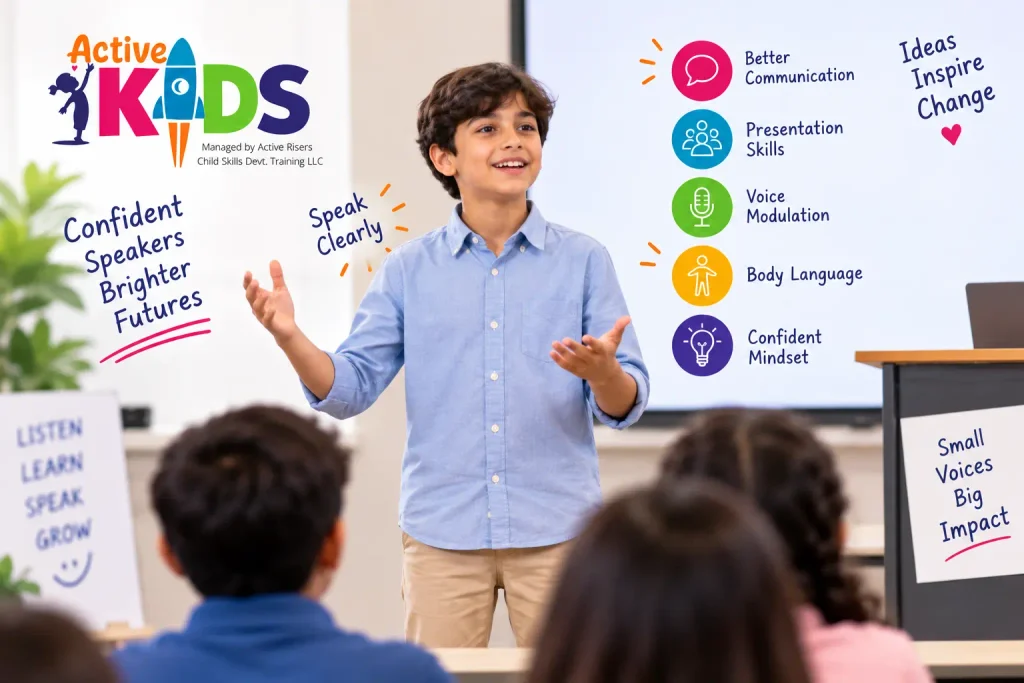
Voice modulation is an important part of effective speech delivery.
Children can practise:
- Volume
- Pace
- Tone
- Pauses
- Emphasis
- Pronunciation
Speaking too quickly can make an idea difficult to follow.
Speaking too quietly can make it difficult for an audience to hear.
Children can learn how to adjust their delivery based on the situation.
Understanding Body Language
Body language can also affect communication.
Children can practise standing comfortably, making appropriate eye contact and using natural gestures.
The aim is not to make every child behave like a professional presenter.
It is to help them become more aware of how they communicate.
5. Encourages Critical Thinking and Quick Thinking
Public speaking requires children to think.
They need to decide what they want to say. They need to select important points. They may also need to answer questions or respond to another person’s opinion.
This is particularly clear during impromptu speaking activities.
Thinking on Their Feet
A child may receive a topic and have only a short time to prepare.
They then need to speak.
At first, this can feel challenging.
With practice, children can learn to organise their thoughts quickly and communicate a response without relying on a fully prepared script.
This can support clearer thinking during classroom discussions and other situations where children need to respond spontaneously.
6. Develops Leadership and Social Skills
Leadership is closely connected to communication.
Children often need to explain ideas, listen to others and contribute to group decisions.
They may also need to take responsibility for a project or help a group reach an agreement.
Public speaking classes for children can provide opportunities to practise these behaviours.
Speaking and Listening Together
Strong communication is not about talking all the time.
Children also need to listen.
Group discussions, role play and debates can encourage children to consider different viewpoints before responding.
These experiences can help children become more comfortable participating in group situations.
They can also learn that confident communication includes listening, respect and thoughtful responses.
7. Helps Children Become More Confident Communicators
The biggest benefit may be the combination of all these skills.
A child who can organise an idea, speak clearly, use appropriate body language and respond to questions has more tools for communicating effectively.
That confidence can be useful in many situations.
Beyond the Classroom
Children may use their speaking skills when they:
- Give school presentations
- Participate in competitions
- Join group discussions
- Take leadership roles
- Introduce themselves
- Share an opinion
- Explain an idea
- Speak to unfamiliar people
Public speaking is therefore not only a performance skill.
It is a communication skill that children can use in everyday life.
What Do Kids Learn in a Public Speaking Course?
The best programmes give children plenty of opportunities to practise.
A course should not be limited to memorising speeches.
Children should learn how to communicate naturally.
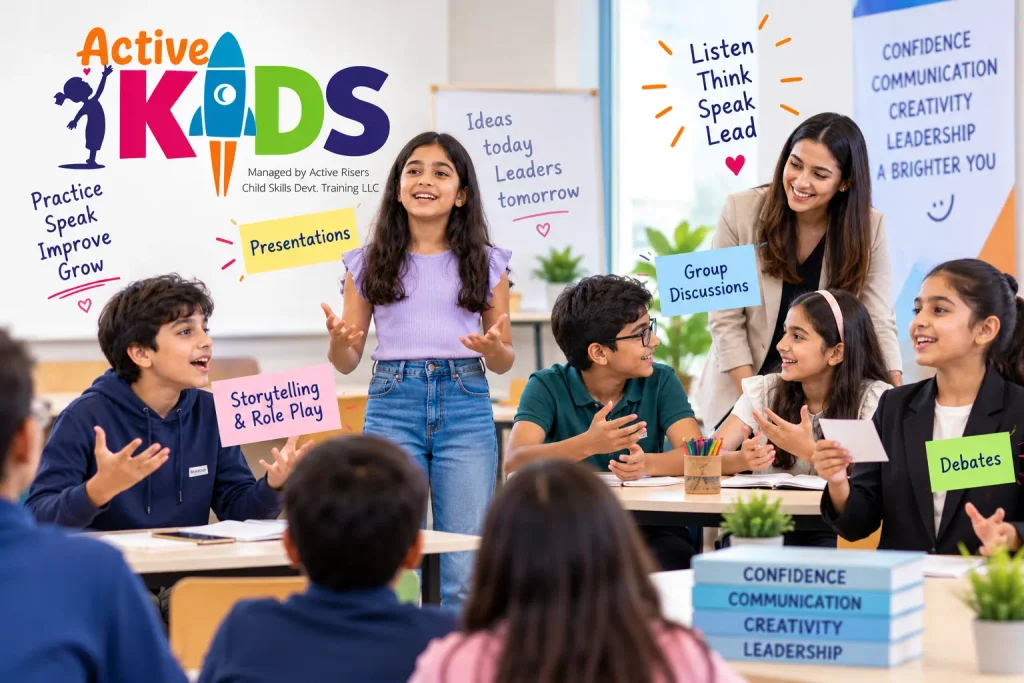
Depending on the programme, activities may include speech writing, storytelling, presentations, role play, group discussions, debates and impromptu speaking.
Speech Structure and Organisation
Children can learn how to structure a speech.
They can understand the difference between an introduction, main points and conclusion.
This gives them a simple process to follow when preparing a presentation.
Speech Delivery
Children can practise how they deliver their message.
This can include pace, volume, pronunciation, pauses and voice modulation.
The focus should be on making communication clear rather than making children sound scripted.
Presentation Practice
Children benefit from actually presenting.
They can practise speaking to a group and receive constructive feedback.
This gives them an opportunity to identify areas for improvement.
Public Speaking Activities for Kids Aged 9–14
Activities make speaking practice more engaging.
They also allow children to develop different skills without relying on the same exercise every time.
Storytelling and Role Play
Storytelling encourages children to use expression and imagination.
Role play adds a practical element.
Children can speak from different perspectives and practise communicating in different situations.
Impromptu Speaking
Impromptu activities encourage quick thinking.
Children may receive a topic and a short preparation period before speaking.
This can help them become more comfortable when they do not have a fully prepared answer.
Group Discussions and Debates
Discussions encourage children to share ideas and listen to others.
Debates add another layer.
Children need to explain their viewpoint and respond to another argument.
These activities can support both speaking skills and thought organisation.
What Makes a Good Public Speaking Course for Kids?
Choosing a course is not only about the number of activities.
Parents should also consider how those activities are delivered.
Age-Appropriate Learning
Children aged 9–14 are at different stages of development.
A nine-year-old may need different support from a fourteen-year-old.
The activities should therefore be challenging without becoming overwhelming.
Practical Speaking Opportunities
Children need to speak.
A course that spends most of its time on theory gives limited opportunities to develop real speaking confidence.
Look for practical exercises and regular participation.
Constructive Feedback
Feedback should be specific and encouraging.
Children should understand what they did well.
They should also know what they can improve.
This gives them a clear direction for their next attempt.
Structured youth speaking programmes can also use prepared speeches, impromptu speaking, evaluation and leadership activities to help young people practise communication skills. Toastmasters International’s Youth Leadership Program is one example of a structured programme designed around these skills.
A Supportive Environment
Children should feel comfortable making mistakes.
Nobody becomes a stronger speaker by getting everything right on the first attempt.
A positive environment encourages children to participate, experiment and keep improving.
How Parents Can Support Public Speaking Skills at Home
Parents can create simple speaking opportunities outside the classroom.
Ask your child to explain something they learned.
Let them tell you about a book they enjoyed.
Ask them to explain why they agree or disagree with an idea.
You can also encourage short presentations at home.
For example, ask your child to speak for two minutes about a favourite hobby or explain how to do something they know well.
Keep the activity relaxed.
The purpose is practice, not perfection.
Focus on Progress
Avoid correcting every small mistake.
Instead, choose one or two areas to work on.
Perhaps your child needs to slow down.
Perhaps they need to speak louder.
Perhaps they need to make better eye contact.
Small improvements can build into meaningful progress over time.
Is Public Speaking Right for Your 9–14-Year-Old?
Public speaking is not only for children who want to perform on stage.
It can benefit children with very different personalities.
A naturally quiet child may want to become more comfortable speaking in groups.
A confident child may want to improve their presentation skills.
Another child may simply need more practice before school presentations feel comfortable.
Look at your child’s current needs.
- Does your child hesitate to share ideas?
- Do presentations make them nervous?
- Do they struggle to organise their thoughts when speaking?
- Do they speak too quickly or too quietly?
- Would they benefit from more structured communication practice?
If the answer is yes, a public speaking programme may be worth considering.
Helping Your Child Become a Stronger Speaker
Confidence does not appear overnight. It develops through small experiences. Give your child opportunities to speak. Let them explain their ideas. Encourage questions.
Listen without immediately correcting them. Celebrate improvement rather than perfection. Most importantly, give them space to find their own speaking style.
A confident communicator does not have to be the loudest person in the room. They simply need to feel comfortable expressing what they think.
Build Stronger Speaking Skills for the Future
Children aged 9–14 are developing skills that will support them throughout school and beyond.
Communication is one of them.
A Public Speaking Course for Kids Aged 9–14 can provide structured practice in speaking, presenting, storytelling, discussion and impromptu communication.
The value goes beyond a single speech.
Children can become more comfortable expressing ideas. They can improve their presentation skills. They can learn to listen, respond and communicate with greater clarity.
With regular practice and the right guidance, public speaking can become less intimidating and more natural.
If your child is ready to develop stronger communication and confidence, choose a programme that gives them real opportunities to speak, practise and improve.
FAQs: 7 Proven Benefits: Public Speaking Course for Kids Aged 9–14
What is the best age to learn public speaking?
Children can start developing public speaking skills at different ages. For children aged 9–14, structured practice can focus on speech delivery, confidence, presentations, storytelling, body language and expressing ideas clearly.
How can I train my child for public speaking?
Start with short, simple speaking activities. Encourage your child to explain an idea, tell a story, give a short presentation or speak about a favourite topic. Regular practice can help children become more comfortable speaking in front of others.
What skills are taught in public speaking classes for kids?
Public speaking classes for kids can cover voice projection, clarity, tone modulation, eye contact, posture, natural gestures, speech structure and presentation skills. Activities may also include storytelling, role play, discussions, debates and impromptu speaking.
How can public speaking help children overcome stage fear?
Children can become more comfortable with stage situations through gradual and repeated speaking practice. Short speeches, interactive activities and constructive feedback can help reduce nervousness while building confidence and better speaking habits.
Are public speaking courses available for kids aged 9–14 in Dubai?
Yes. The research data shows several public speaking programmes in Dubai and online options that cater to children and young learners, including programmes covering presentation skills, storytelling, voice modulation, body language and stage confidence. Parents should compare the age group, course structure, activities and learning format before choosing a programme.