

Introduction
Parents often want to know what their child will actually do in a speaking lesson. Will they give a speech straight away? Will they need to turn on the camera and talk in front of a group? And what if they are shy or need time to find the right words?
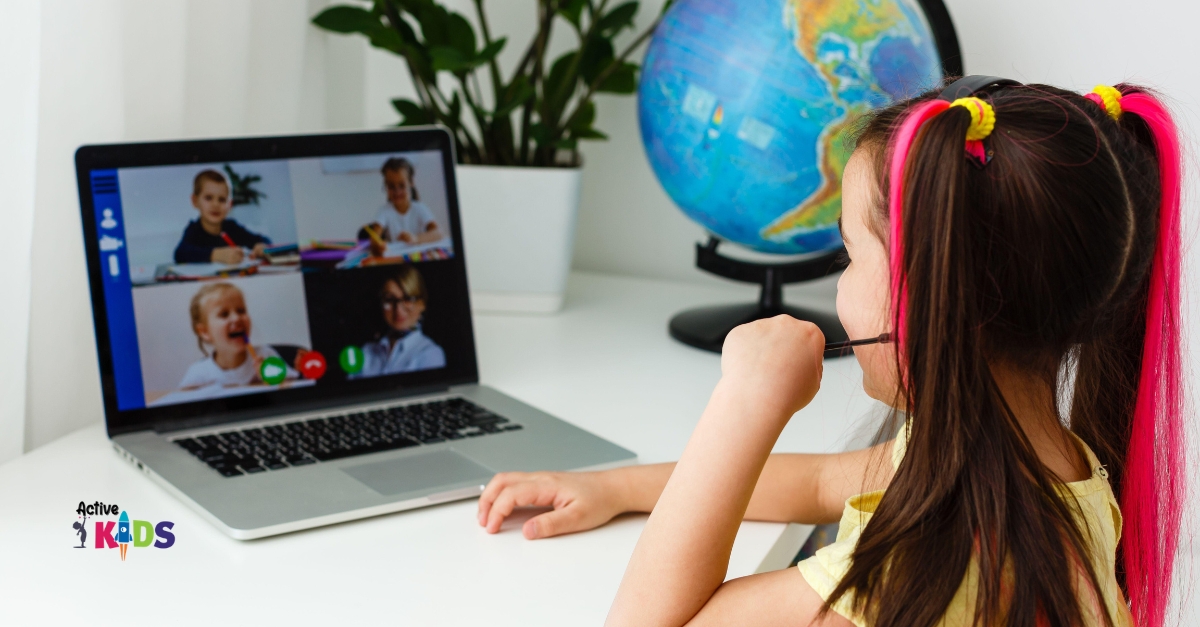
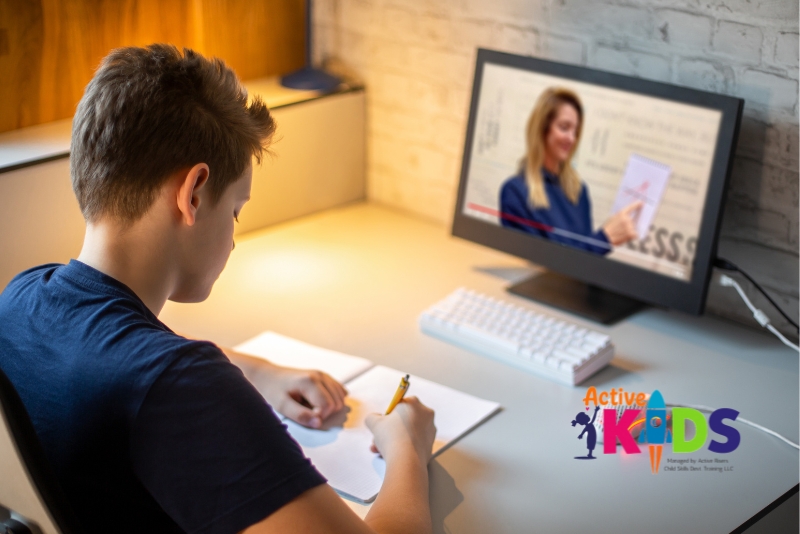
In a well-planned class, children are not expected to become confident speakers overnight. They learn in manageable steps: organising an idea, speaking clearly, listening to feedback and trying again. Online public speaking classes for kids can give children regular opportunities to practise from home, provided lessons are interactive and suited to their age and experience.
What does a typical online lesson look like?
A useful lesson has a clear purpose, time for practice and feedback the child can understand. The format varies by age and programme, but a session may include a short warm-up, a guided speaking activity, individual turns and a quick review at the end.
1. A warm-up that gets children talking
The session might begin with a simple question, a picture prompt or a quick show-and-tell activity. A child could describe a favourite toy, explain what happened at the weekend or share one thing they learned that day. These small tasks help children get used to speaking aloud without starting with a long, formal speech.
Warm-ups should feel purposeful rather than like a test. The aim is to help each child join in, gather their thoughts and get comfortable using their voice.
2. Storytelling and organising ideas
Children often have interesting things to say but find it difficult to put those thoughts in order. A teacher can help them build a simple beginning, middle and ending, or explain an idea using two or three clear points. For younger learners, a picture sequence or familiar story can make this easier. Older children might prepare a short talk about a hobby, a book or a topic they care about.
This practice can support communication in everyday situations, including classroom discussions, school presentations and conversations with new people.
3. Practising voice, pace and body language
Speaking well is not about sounding like a television presenter. Children need to be understood and to feel comfortable expressing themselves. During a lesson, they may practise slowing down, speaking loudly enough to be heard, pausing between ideas and looking towards the audience or camera when it feels natural.
Teachers may also discuss posture, facial expression and gestures. Feedback should be specific and encouraging. For example, ‘Pause after your first point’ is easier to act on than ‘Speak better.’
4. Taking a turn and listening to others
Depending on the group and lesson design, children may speak individually, answer a question, respond to a classmate or work through a short presentation. Listening matters too. A child can practise waiting for their turn, noticing what another speaker said and responding to the actual point rather than rushing to give an answer.
Online lessons should make participation manageable. Some children may be ready to speak straight away; others benefit from a little preparation time before sharing.
5. Receiving feedback and trying again
Useful feedback tells a child what worked and what to practise next. It might focus on a clear opening, a well-organised explanation, audible speech or a stronger ending. The child should then have a chance to apply that advice, even if it is only by repeating one sentence or improving one part of a short talk.
Progress is rarely a straight line. A child who speaks confidently one week may feel hesitant the next. Regular practice and a supportive teacher are more useful than pressure to perform perfectly every time.
What skills can children practise online?
With an age-appropriate programme, children may work on:
- Organising thoughts before speaking
- Telling stories and describing experiences
- Using a clear voice and a comfortable pace
- Using eye contact, posture and purposeful gestures
- Presenting ideas to a group
- Listening and responding respectfully
- Managing nerves before speaking
- Accepting feedback and making improvements
These are skills to practise, not instant results to promise. A class can provide structure and opportunities, while each child’s progress depends on attendance, practice, readiness and the teaching approach.
Are online lessons suitable for shy children?
They can be, but the lesson environment matters more than the word ‘online’ by itself. A child who is hesitant to speak may appreciate practising from a familiar setting. At the same time, a virtual class still asks children to participate, so parents should look for a teacher who builds participation gradually rather than putting a child on the spot.
Before enrolling, ask how the teacher supports children who need more time, whether activities are adapted by age and confidence, and how feedback is shared with parents. A free trial or introductory session can help you see whether the format suits your child.
How can parents support practice at home?
You do not need to turn every evening into a speech lesson. A few minutes of relaxed practice can help. Ask your child to explain the rules of a game, tell you about a favourite character or describe how they made something. Listen without interrupting, then ask one follow-up question.
If your child is preparing a short talk, help them choose a topic they care about and practise the opening. Avoid correcting every pause or gesture. Too much feedback at once can make speaking feel like a performance review instead of a skill they are learning.
How to choose a class that fits your child
Look beyond a promise of ‘confidence’. Ask what children do during a normal session and how the teacher helps them improve. A suitable programme should explain its age range, learning activities, feedback process and opportunities to speak during class.
Check whether the course includes storytelling, presentations or other practical speaking tasks, and whether the teaching style suits your child. If your goal is to help your child speak more clearly, ask how progress is observed and communicated rather than relying on broad guarantees. When comparing online public speaking classes for kids, look for specific examples of practice and feedback rather than a promise of instant results.
Explore Speak & Shine at Active Kids Online
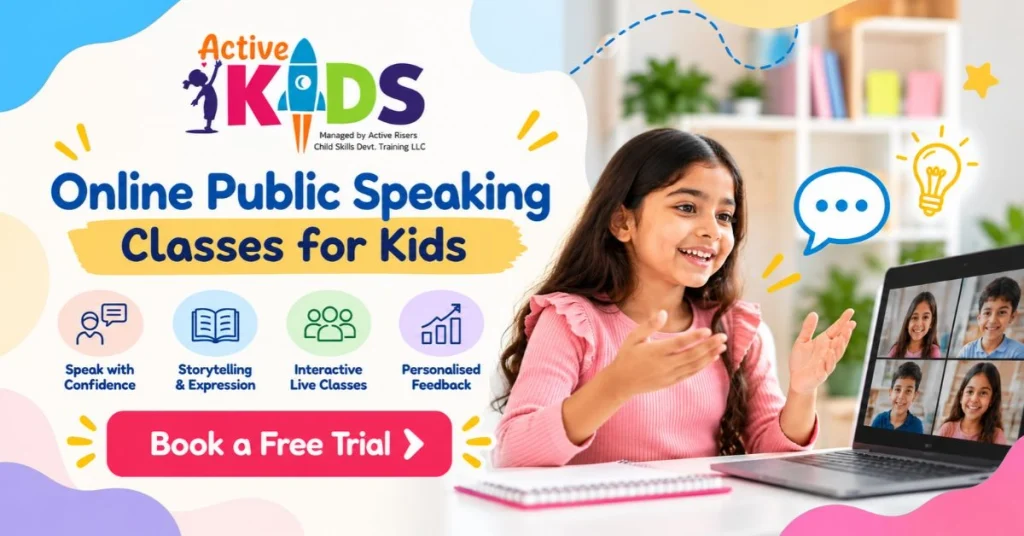
Active Kids Online offers Speak & Shine, a programme for children that includes communication-focused learning such as elocution, speech and drama, and debate. Parents can review the programme details and decide whether the learning approach fits their child’s needs.
If you are comparing online public speaking classes for kids, start by looking at the lesson format, the skills taught and how your child will get to practise. You can explore the course and enquire about a free trial to understand the next step before making a decision.online public speaking classes for kidsfree trial
FAQs: What Happens in an Online Public Speaking Class for Kids?
What age can children start public speaking lessons?
The right starting age depends on the programme and the child. Younger children can begin with short, playful activities, while older learners may be ready for longer presentations. Ask whether lessons are adapted to your child’s age and experience.
Can a child learn public speaking online?
Yes, online lessons can provide guided practice, speaking turns and feedback. The quality of the experience depends on the teacher, lesson design, group size and how actively children participate.
How often should children practise speaking?
Short, regular practice is usually easier to maintain than occasional long sessions. Children can practise by telling a story, explaining an idea or preparing a brief presentation, while following the guidance provided by their teacher.
Will public speaking classes make my child confident?
Classes can give children structured opportunities to practise and receive feedback, but confidence develops differently for each child. Be cautious of programmes that promise immediate or guaranteed results.
What should parents ask before enrolling?
Ask about the lesson format, age range, speaking activities, teacher feedback, opportunities for individual practice and how progress is communicated to parents.